The Line array PA system is a mainstay in live sound reinforcement. However, you must assess them to determine if they are right for you.
I’ve pulled together this guide to line array systems to help you determine if you should invest in a set. I will cover their defining features and how they could work in PA system.
What Is a PA System?
PA stands for ‘public address,’ so a PA system is an audio system for projecting sound to audiences. This is for more than just public speaking – musical performers use PA systems. PA systems are used in many locations and for a wide variety of applications.
Some places you can expect to find this kind of system include concert halls and theaters, houses of worship, stadiums, clubs, arenas, and more.
They are made up of lots of different components and equipment. These include:
Microphones – Used for converting vibrations from sound waves into electrical signals.
Amplifiers – Used to make audio louder.
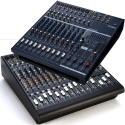
Mixers – This is where effects like EQ are added. These can reduce noise, clean up the audio, and add special effects to music.
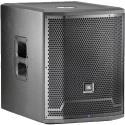
Loudspeakers – Used to emit sound out into the venue.
To have a good system, each piece of equipment must work effectively and efficiently.
What Makes a Good PA Speaker System?
There are three main factors when considering what speakers to use in your PA system. These are:
Wattage – Wattage will influence the volume of your speaker and how clearly your audience can hear it. The rule of thumb is the more watts a speaker needs, the louder it can play audio.
This is clearly an essential factor to consider because if your speakers are strong enough, your audience will hear you.
There are other ways you can influence the volume of your speakers. Consider the venues and kind of room they will be used in.
Also, consider the source and the distance between your speakers and the audience. You want to avoid loudspeakers that will deafen those in the front row.
Speaker Size – If you are touring with your speakers, you will want them to be compact and portable to move from venue to venue. Also, consider the material of the cabinet.
Cabinets made from particular materials are lighter than others. If you want a portable speaker, choose one made from a lightweight cabinet material.
Sound Quality – Clarity is vital with speakers. There’s typically a correlation between speaker sound quality and its price. The higher the price, the better the sound quality.
If you can’t afford the best speakers on the market, keep an eye out – you may be able to purchase one on sale.
What Is a Line Array Speaker System?
Now you know what a PA system is and what you should look for in a speaker system, let’s take a closer look at line arraying loudspeakers.
Breaking down the line array’s name will help you better understand their design.
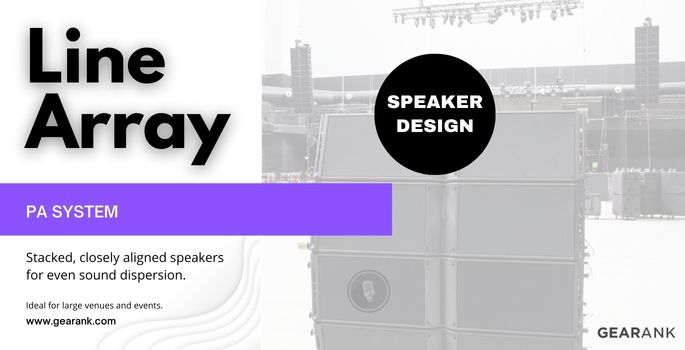
Line refers to how the sound is projected linearly. This is opposed to Point source where sound radiates from a single point.
Arrays in audio are identical loudspeaker units arranged for controlled dispersion pattern.
The line arrays are typically arranged vertically, stacking speaker upon speaker.
That’s not all – some line arrays are also built so each speaker faces slightly different directions. This allows them to cover a larger dispersion area, so even in large venues, audience members at the back hear the same sound quality as people closer to the stage.
This gives them a shape that is unlike any other speaker system.
The angle of the speaker design also helps reduce narrow vertical dispersion. Vertical dispersion is when sound is projected vertically, which can introduce problems. It can create poor-quality sound due to reverb bouncing off celings.
You can find line array systems in stock and sell under various brands, including QSC, Electro Voice, JBL, and Altec Lansing.
Why You Should Consider a Line Array PA System
So, now you know what a line speaker is – but what benefits can it offer you? Why should you opt for a line array speaker system?
Let’s look at some of the benefits of a line array speaker system.
Improved Sound Dispersion
When trying to fill a venue, the typical class D amplifier speakers will usually be driven hard. This is will be too loud for the front row audience. Sound quality and listening comfort suffers, especially for people closer to the speakers.
Line array systems were engineered and designed to alleviate this problem. They have improved sound dispersion so the front row audience won’t have to bear the grunt of loud speakers.
The speakers are arrayed in a position that provide equal loudness and quality in nearly any distance. So, sound from a line array system is more likely to fill a whole room without relying on sheer volume.
When you prioritize dispersion over loudness, you can have a more consistent sound quality across the venue. Together with good preparation and sound check, you are assured of good sound through out the performance.
This makes them great options for outdoor and indoor use at large venues.
Efficiency
A line array system is also known for its excellent efficiency when it comes to power usage. This is because the line array relies on its design instead of using more watts to boost its volume.
This means that, unlike other speaker designs, it doesn’t need to use maximum sound pressure level to fill the venue.
The Disadvantages of Line Array Speakers
There are some factors you need to consider about line arrays before you make your final decision.
They are not always portable. Line arrays usually require fixed installation and usually require large riggings and structures. This means that if you are touring, you can’t take your larger line arrays with you. Smaller line array speakers exist but are limited to a smaller stack with limited dispersion. One line array speaker set can be large. This means you need to take into consideration the size of your venues.
They are pricey. Even on sale, a line array system will cost you much money. There are alternative speaker systems out there available at a much lower price.
Final Thoughts
So is a Line Array PA system right for you? Should you use line array speakers in your PA system?
It all depends on what you require from your loudspeaker system. A line array system would work great for large concert venues. They have excellent sound dispersion, so they work very efficiently – but they might be overkill for smaller, enclosed performances.
Touring performers would benefit from more compact systems sold at a lower price with more versatility. As a result, there are better options for many people.
A good alternative for you to consider is a column loudspeaker. These are more compact and affordable and use similar line array technology. If you are using a smaller venue, this may be a better speaker for your PA system.