


The Best Guitar Headphone Amp for 2023 | Both Floor and Bug
Author & Contributors
Alexander Briones
I have been writing about and researching music gear for many years, all while serving as a music director at my local church. I engage in guitar playing and singer-songwriter stints, in addition to mentoring young musicians and teaching guitar and bass.
Best Guitar Headphone Amps
These are the small types that are most often thought of when talking about headphone amps for guitar.
Valeton Rushead Max
Cons
- The unit has a plasticky feel that requires handling care
- The plug is fixed, limiting how you can attach the unit to your guitar
- The built-in rechargeable battery is convenient but not easily serviceable
Pros
- Good sounding versatile amp voicings
- Good tone shaping controls that work well with different types of pickup types and configurations
- Built-in Modulation and Ambiance effects
- Lightweight and portable
- Convenient built-in USB rechargeable battery
- Very affordable
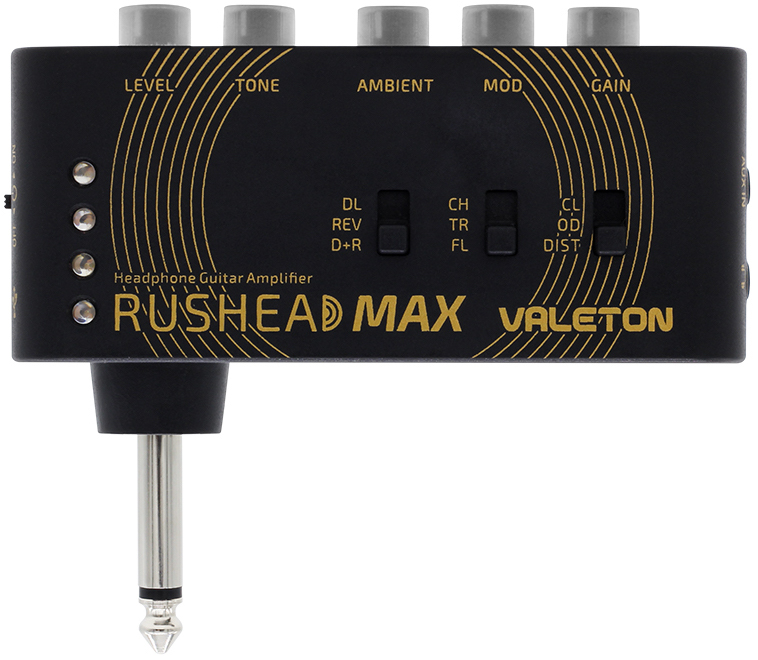
For a compact guitar headphone amplifier, the Valeton Rushead Max packs quite a lot of guitar rig essentials. And it does so while maintaining a very accessible price tag.
It lets you choose between the most commonly used amp types: "CL" (clean tones based on US-made amps), "OD" (crunchy overdriven tone based on popular UK amps), and "DIST" (based on modern high-gain amps), and switching between these amp voicings is done on its easy to use streamlined interface.
Tone shaping is done via the included tone, gain, and level knobs. These tweaks can also accommodate different pickup configurations and types better, allowing you to get good tones regardless of the guitar you use.
On the effects side, it has a switch that lets you choose between 3 essential modulation types, including tremolo, chorus, and flanger.
This headphone guitar amp comes with ambient effects, including delay and reverb, with an option to use both simultaneously. This can be used to add realism to the guitar sound you're hearing through your headphones.
Other features include aux input and the ability to charge the unit via USB. These are packed in a typical lightweight plastic housing with a fixed plug that directly mounts on your guitar.
Note that Valeton does not have a warranty document available online. After contacting them, they confirmed that the warranty is processed through the seller.
This is for you if you're looking for a budget-friendly yet versatile guitar headphone amplifier.
Specifications
- Tone: Switchable (Clean, Overdrive and High Gain)
- Effects: Tremolo, 3 x Chorus, 3 x Delay, 3 x Reverb
- Controls: Knobs: Gain, Tone, Volume | Button: FX, Power/Amp Mode
- Inputs: 1 x 1/4", 1 x 1/8" (Aux in)
- Headphones: 1 x 1/8"
- Power Source: USB Rechargeable (Up to 5 hours)
Support Links
- Product Manual
- Warranty - (1 Year via Seller)
- Valeton Support
| Website | Source | *Rating Value |
| Youtube | GrowWithGuitar | 94/100 |
Vox amPlug 2 Classic Rock
Cons
- Cramped controls cause accidental setting changes
- Sounds muddy and fizzy at high-gain settings
- Made mostly of lightweight Plastic material, requires extra handling care
Pros
- True to form classic rock tone in low to mid-gain settings
- Tube amp like transparency and bite that make it work well with other genres
- Switchable mid-boost that allows for cranking up the amp further
- Affordable but premium looking with old-school vintage amp-style cosmetics
- Plug with swivel allows for easier storage and positioning
- Lightweight and portable
- Packaged securely and comes with AAA batteries included
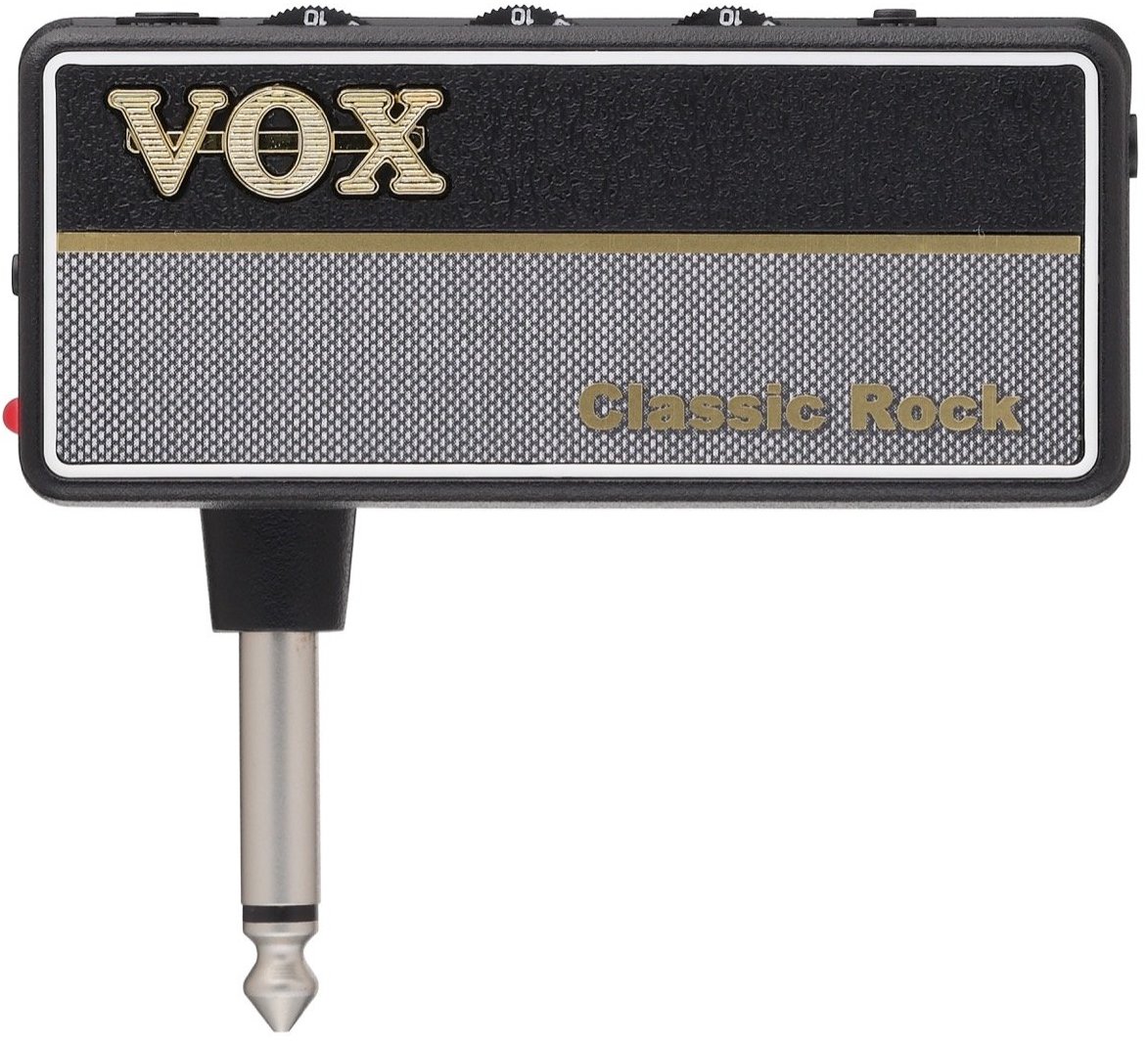
At the core of classic rock tones are old, overdriven tube amps that are often times cranked hard. In my experience, even big amps and guitar processors have difficulty emulating this sound, so I wasn't expecting much from something this small.

Thankfully, my low expectations were quickly exceeded. The AP2-CR did a nice job of emulating the midrange emphasis and crunchy overdrive flavor commonly associated with classic rock tunes.
I especially love the "bite" when digging into the strings, making this a fun amp for practicing solos and improvisation. More importantly, I'm pleased there's enough transparency with its overdrive to still sound like "myself".
Surprisingly, notes seem to decay organically like tube amps, which is a big plus. Chords sound surprisingly detailed and full, but only in low to mid-gain levels.
Speaking of gain levels, driving this classic guitar headphone amp up too many results in muddy-sounding chords and fizzy single-note lines. This is unfortunate but understandable, given this unit's price and target market.
The muddy tone is especially noticeable when using single-coil pickups, but thankfully, it's not as muddy when I switch from Strat to Les Paul.
What sets this one apart from other amPlugs is its switchable (color-coded) "Mid-Boost" Mode. It lets you choose between Mid-boost Off (Green), Mid-boost 1 Lo (Orange), and Mid-boost 2 Hi (Red).
This feature adds a virtual switchable booster circuit into the unit, emulating many rock guitarists' commonly used boost pedal + amp setup.
This headphone amp is not meant for Vox AC30 style clean tone. But I can get good clean tones by turning the gain knob all the way down in Green mode (Mid-boost Off).
But I prefer the slightly dirty and gritty cleans the Orange and Red modes provide. This mid-boost works really well with my Strat, letting me hear the nuances of my playing better.
This is a great practice amp for fans of the gnarly guitar tone of classic rock.
Specifications
- Tone: Classic Rock
- Effects: 3 x Chorus, 3 x Delay, 3 x Reverb
- Controls: Knobs: Gain, Tone, Volume | Button: FX, Power/Amp Mode
- Inputs: 1 x 1/4", 1 x 1/8" (Aux in)
- Headphones: 1 x 1/8"
- Power Source: 2 x AAA Batteries (Up to 17 hours)
Support Links
- Product Manual
- Warranty - (1 Year)
- Vox Support
| Website | Source | *Rating Value |
| Gearank | Alexander Briones | 90/100 |
Demo
Vox amPlug 2 Blues
Cons
- Lightweight plastic housing and plug swivel require handling care
- Controls are close to each other, sometimes resulting in inadvertently messing up the settings
Pros
- Great blues tone (even better when using headphones with good low-end response)
- Versatile gain voicings with Clean, Crunch and Lead options, ideal for fans of Blues and Rock music
- Plug swivel mechanism for easier storage and positioning
- Intuitive controls
- Lightweight and portable
- Unmistakable Vox aesthetics
Vox continues to be the go-to brand for electric guitar headphones use, thanks to the success of their amPlug line, which is now on its 2nd generation.
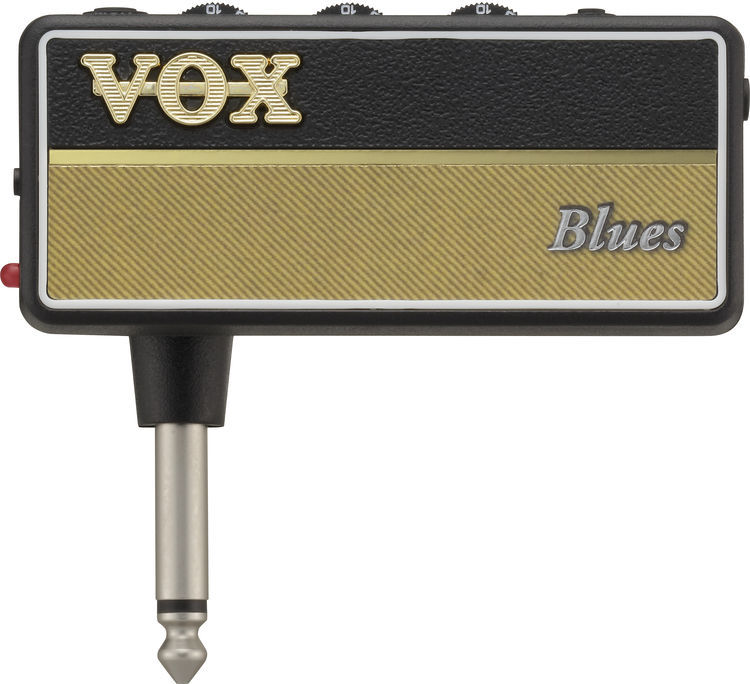
The amPlug 2 Blues is among their best offerings, designed to reproduce the famous Tweed amp tone. It gives you great sounding Texas blues style grit straight through headphones. This is quite the feat because blues tones require more clarity and dynamics, which even full size amps struggle to reproduce.
Even if you're not into Blues style, hearing the nuances and details of your playing will help you make more accurate assessments of your skill and make proper adjustments. For this reason, this amPlug works well with other styles, except those requiring heavy gain.
Speaking of gain, Vox equipped this unit with three selectable voicings: Clean, Crunch, and Lead, which you can cycle through via a single button on the side. It also comes with three chorus types, delay and reverb, although you'll probably use reverb most of the time for blues.
Being a bug-type amplifier, it attaches to your guitar directly via the main plug and is powered by 2 x AAA batteries. The plug is adjustable via a five-notch 180-degree swivel mechanism for better positioning and easier storage. It also helps that amPlugs retain classic aesthetics that are unmistakably Vox.
Note that it has an auto-power-off feature to save batteries if you forget to turn the unit off.
If blues is your thing, this is your ideal silent amplifier for practice sessions.
Specifications
- Tone: Blues (Tweed Crunch)
- Effects: 3 x Chorus, 3 x Delay, 3 x Reverb
- Controls: Knobs: Gain, Tone, Volume | Button: FX, Power/Amp Mode
- Inputs: 1 x 1/4", 1 x 1/8" (Aux in)
- Headphones: 1 x 1/8"
- Power Source: 2 x AAA Batteries (Up to 17 hours)
Support Links
- Product Manual
- Warranty - (1 Year)
- Vox Support
| Website | Source | *Rating Value |
| Youtube | Grant Parker | 95/100 |
Demo
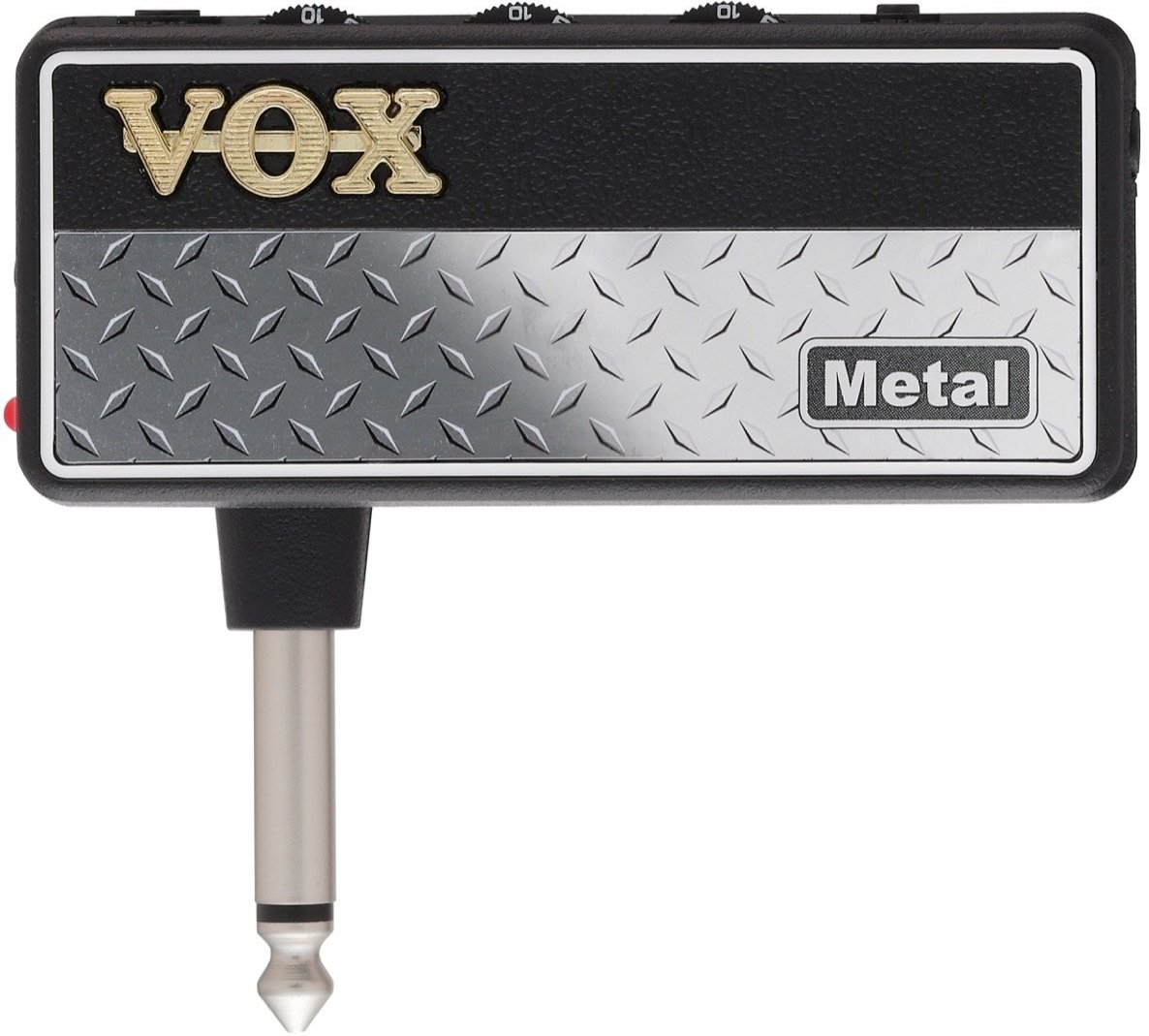
Vox amPlug 2 Metal
Cons
- Lacks bass response compared to combo amps
- Lightweight plastic housing and plug swivel require handling care
- Controls are close to each other, sometimes resulting in inadvertently messing up the settings
Pros
- Good full-sounding high gain tone, ideal for metal, rock and similar styles of music
- Versatile tone shaping with mid-scoop options
- Plug swivel mechanism for easier storage and positioning
- Intuitive controls
- Lightweight and portable
- Unmistakable Vox aesthetics
Regardless of ever-changing musical trends, there's no stopping the popularity of high-gain tones among guitarists. But it's not easy to get good metal tones at lower volumes, even more so when listening via headphone guitar amps.
This is where the Vox amPlug 2 Metal comes in, a compact bug-type headphone amplifier that provides convincing high-gain tones that sound full even through the small speakers of headphones.
Vox describes the tone as "American high-gain", which fits the bill nicely. It has voicing variations via its three mid-scoop options: Mid Cut Off, Mid Cut Lo, and Mid Cut Hi. This gives you flavors that range from flat to V-style scooped sound.
While the tone it provides is not up to the same standards as expensive high-gain tube amps, it is metal-sounding enough for popular guitar player Ola Englund.
It follows the tried and tested amPlug form factor, with unmistakably Vox cosmetics. It features swivel-capable plugs that make storing the unit and attaching in different positions easier. And it doesn't stray from the streamlined control settings that are found on other amPlug gen 2 units.
Other features of the amPlug 2 Series are added in, including built-in effects, folding plug, auto-power off, and aux-in.
The Vox amPlug 2 Metal is a portable high-gain metal "rig" that will not disturb your loved ones.
Specifications
- Tone: Metal (High-Gain)
- Effects: 3 x Chorus, 3 x Delay, 3 x Reverb
- Controls: Knobs: Gain, Tone, Volume | Button: FX, Power/Amp Mode (Mid-cut Low, Mid-cut High, Flat)
- Inputs: 1 x 1/4", 1 x 1/8" (Aux in)
- Headphones: 1 x 1/8"
- Power Source: 2 x AAA Batteries (Up to 17 hours)
Support Links
- Product Manual
- Warranty - (1 Year)
- Vox Support
| Website | Source | *Rating Value |
| Youtube | Jim Griffin | 95/100 |
Demo
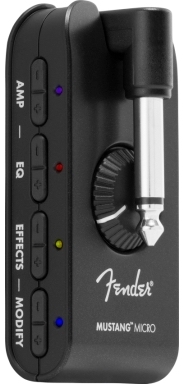
Fender Mustang Micro
Cons
- It would've been nice to have deeper control via software editor
- Substantially more expensive than other bug-type options
Pros
- More amp tones and effects packed in similar compact size bug-type unit
- Great sounding cleans, and low to mid-gain tones
- Modern Bluetooth and USB-C connectivity
- Plug swivel mechanism for easier storage and positioning
- Lightweight and portable
- With its expanded features, you are getting more value for your money
Fender secures a spot in this guide by loading the features of their Mustang series amps into the compact Mustang Micro, a bug-type guitar headphone amplifier unit.
What sets this one apart is the use of newer technology, including Bluetooth compatibility (for playing with your favorite audio) and USB-C connectivity for direct recording, essentially making this unit double as a guitar audio interface.
Having more amp models and effects is another noteworthy advantage of this unit. Like the Mustang amps, it comes with Fender's digital GTX amp and stomp models, with up to 12 amps and 13 effect types to play with. This allows for much more sonic flexibility than the competition offers, albeit at a higher price point.
Like its bigger Mustang amp siblings, this unit excels in clean to mid-gain tones, although its high-gain options are not bad.
These features are powered by a rechargeable lithium-ion battery that can run up to 6 hours per charge.
Even with its size limitation, Fender could still equip this unit with essential controls for tweaking the amp, effects, EQ, and volume.
The plug angle can be adjusted to accommodate different guitars and even basses, and it can also be folded for easier storage.
With its modern features and big brand backing, the Fender Mustang Micro is definitely worth investing in.
Specifications
- Tone: 12 Amp Models, Adjustable EQ
- Effects: 12 Effect Models including Modulation, Delay and Reverb
- Controls: Knobs: Gain, Tone, Volume | Button: FX, Power/Amp Mode
- Inputs: 1 x 1/4"
- Headphones: 1 x 1/8"
- Power Source: Rechargeable Lithium-ion Battery (Up to 6 hours)
Support Links
- Product Manual
- Warranty - (2 Year)
- Fender Support
| Website | Source | *Rating Value |
| Guitar.com | Josh Gardner | 90/100 |
Demo
Compact Multi-Effects as Headphone Amps
Here are top-rated portable guitar effects pedals that are also great for playing through headphones. Although these guitar processors are not as convenient and portable as bug-type headphone amplifiers, they offer tone variety and can be used with a regular amp or with a PA system / audio interface.
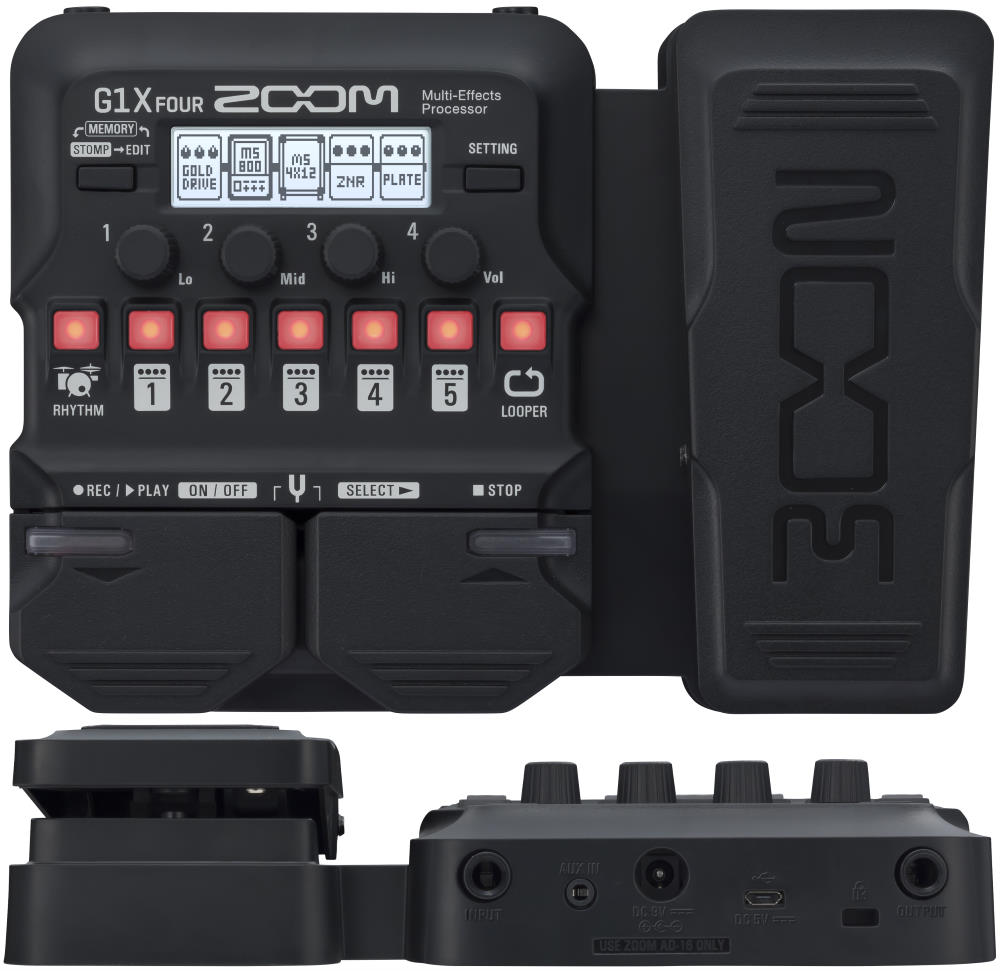
Zoom G1X Four
Cons
- User interface requires a bit of time to get familiar with
- Pushing the unit into high-gain territory may make it sound "fizzy", requiring more tweaking to make it sound good.
Pros
- The G1X Four is a do-it-all compact pedal that works great as a guitar headphone amplifier
- Some nice sounding amp models, especially the clean and mid gain models
- Good sounding cabinet simulations
- Versatile in tone and function
- Good build quality
- Reasonable portability
Zoom is a long-time manufacturer of guitar multi-effects processors, and is the go-to brand for many beginner to intermediate players.
They are also known mostly for their quality-to-value ratio, exemplified by the G1X Four, an affordable and compact multi-effects unit with many features.
Most relevant to this guide are the 16 cabinet simulations that make it work great as a headphone amplifier.
For its size, this comes with a wide array of features, including 13 amp models, 71 effects, and 90 total presets. That's a lot of room for everything from subtle overdrive use to experimental effects.
Speaking of effects, this unit allows for up to 5 types of effects used simultaneously, which should be more than enough to cover a wide variety of tones and for crafting your own sound. It even comes with a built-in looper.
It also has an expression pedal for real-time control over volume, wah, and certain effect parameters.
This real-time, hands-free control option is another important advantage over bug-type units. The downside is the bigger size and the complications of setting up floor space and a cable.
The Zoom G1X Four is the best-value compact multi-effects that can double as a convenient guitar headphone amplifier.
Specifications
- Tone: 13 Amp Models, 16 Speaker Cabinets
- Effects: 70 Effects (Up to 5 Simultaneously)
- Controls: Knobs: Lo, Mid, High, Vol, | Buttons: Setting, Edit, Rhythm, Looper, 5 Selector Buttons | Footswitches: 2 and 1 Expression Pedal
- Inputs: 1 x 1/4", 1 x 1/8" (Aux in)
- Headphones: 1 x 1/4"
- Power Source: Zoom AD-16 AC adapter (Not Included), USB Bus Power, 4 x AA batteries
Support Links
- Product Manual
- Warranty - (1 Year)
- Zoom Support
| Website | Source | *Rating Value |
| Music Radar | Alex Lynham | 80/100 |
| Inside Audio | Rik Blom | 80/100 |
Demo
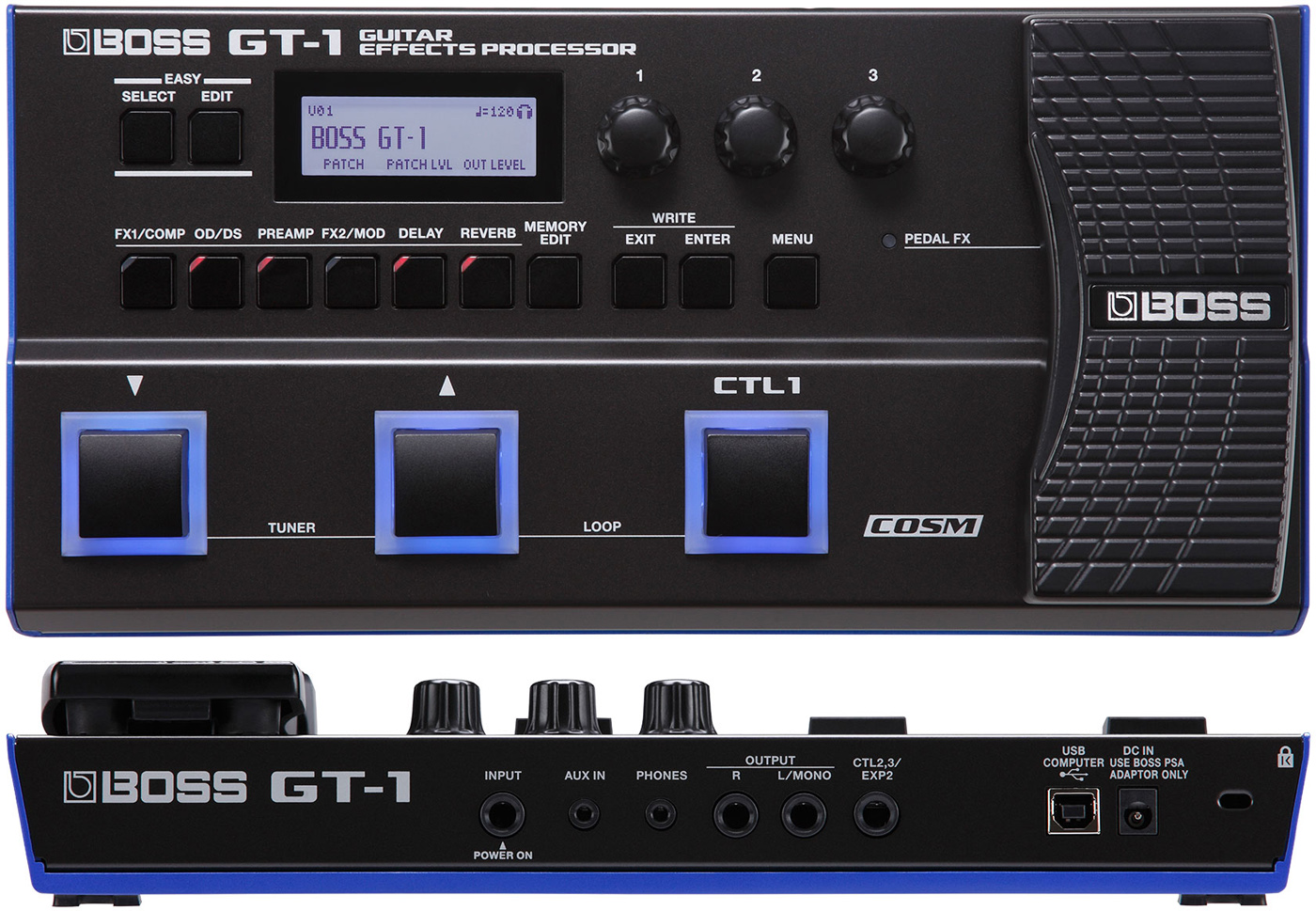
Boss GT-1
Cons
- While this is still small for what it does, it is still relatively big when compared to other guitar headphone amp options
- You need to buy a compatible power supply separately
Pros
- Great sounding amp models that translate well through headphones
- Great sounding effects derived from Boss' guitar processors
- Good selection of amps and effects
- More handsfree control options
- Given its many features, the GT-1 retains a reasonably portable profile
- Reliable and durable
The Boss GT-1 gives you the same COSM DSP technology found in their expensive guitar processors, albeit in a smaller and lighter package.
By plugging your headphones into this unit, you benefit from a wide selection of Boss effects and amp models, with more buttons and foot control options, while retaining a reasonably portable and compact profile. It even comes with acoustic tone options for use with a pickup-equipped acoustic guitar.
And it's not just about having more tones because the GT-1 is known great tones and good-sounding amp models. This includes high-gain tones that translate well through cans, much like they would through regular speakers.
For its size, this unit gives you quite a lot of footswitches, three in total, and an expression pedal, making the GT-1 a compact all-in-one guitar rig that you can use both on stage and for silent practice.
For better control, it comes with a backlit LCD display and an array of knobs and buttons. This also makes the GT-1 a great tool for learning about the many different guitar amps and effects without the usual cost and bulk associated with them. Further control is available via the Boss Tone Studio App.
When I played with the GT-1, I was surprised at how light and compact it is, it has a good size-to-weight ratio that beats most of the guitar processors I've tried. Finally, it can run on four AA batteries, which makes it a truly portable all-in-one rig.
The Boss GT-1 is a reliable, versatile, and compact guitar processor that works just as well through headphones, an amp, or even a PA system.
Specifications
- Tone: Over 20 Preamp Voicings
- Effects: 108 COSM Effects
- Controls: 3 x Footswitches, 1 x Expression Pedal, 3 x Knobs and Multiple Buttons
- Inputs: 1 x 1/4", 1 x 1/8" (Aux in)
- Headphones: 1 x 1/4"
- Power Source: 9V DC power supply (Sold Separately) or 4 x AA batteries
Support Links
- Product Manual
- Parameter Guide
- Warranty - (1 Year)
- Boss Support
| Website | Source | *Rating Value |
| Premier Guitar | Matthew Holliman | 80/100 |
Demo
Line 6 HX Stomp
Cons
- Making the most of its advanced DSP requires experience and control familiarity
- Expensive for a guitar headphone amp, but is worth the money if you consider its overall functionality
Pros
- Great sounding amp and effects through headphones
- Stage and recording ready features and audio quality
- Versatile tone options while retaining a reasonably compact profile
- Solid build and reliable performance
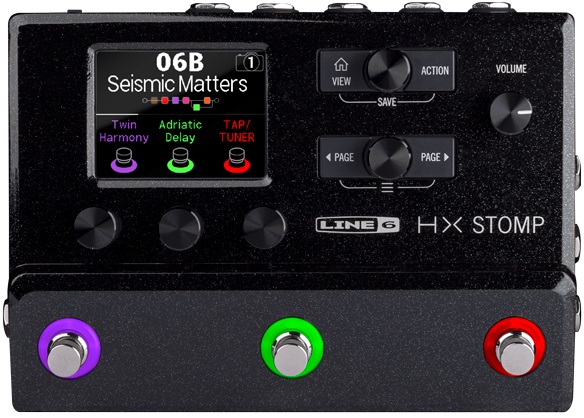
The HX Stomp packs Helix's digital sound processing technology in a portable 3-switch pedal complete with high-end cab simulation and support for Impulse Responses that make it ideal for headphone use.
Being part of Line 6' Helix line, it utilizes the company's latest digital sound processing (DSP) technology that produces convincing amp and effect sounds.
And since amp modelers are designed to sound good with full-range speakers, they translate just as well for recording and quiet practicing through headphones.
It comes with 126 presets, allowing up to 8 blocks per preset. To fill up these blocks, you can choose from over 300+ amp models, effects, and cabinet simulations from the Line 6 Helix line M-series effects, and it even includes some of their older models.
This versatility is the main reason why the HX Stomp is a market favorite when it comes to compact guitar processors.
If that's not enough, it even comes with pitch-shifting effects and a looper, and all its features are packed inside a compact pedal with 3 foot switches.
If you're looking for a high-quality compact guitar processor that can give quality tones straight to your headphones, check out the Line 6 HX Stomp.
And this versatility is the main reason why the HX stomp is a market favorite when it comes to compact guitar processors.
If that's not enough, it even comes with pitch shifting effects and a looper, and all its features are packed inside a compact pedal with 3 foot switches.
If you're looking for a high quality compact guitar processor that can give quality tones straight to your headphones, then check out the Line 6 HX Stomp.
Specifications
- Tone: 100+ Amp Models, Speaker Cabinets
- Effects: 200+ Effects (Up to 8 Blocks Simultaneously)
- Controls: Knobs: 6 Assignable | 2.4" Display | Footswitches: 3
- Inputs: 2 x 1/4" (L/Mono,R), 2 x 1/4" (L/R, Aux In)
- Headphones: 1 x 1/4"
- Power Source: 9V DC power supply (included)
Support Links
- Product Manual
- Warranty - (1 Year)
- Extended Warranty - (Plus 1 Year)
- Line 6 Support
| Website | Source | *Rating Value |
| Sound on Sound | Paul White | 94/100 |
Demo
Things to Consider When Buying a Guitar Headphone Amplifier
-
There's really no substitute for the feel and vibe of a cranked guitar amp, but since people around us have limited noise tolerances, we don't always have this privilege. While you can connect Amp to Headphones, they are less convenient than headphone amplifiers. Sometimes, the convenience of quick plug-and-play use and the ability to play your guitar on your bed or while walking around can inspire you to spend more time improving your skills and tone. Or maybe even write a song or two - hopefully resulting in making more and better music.
Form Factor
- Headphone amps come in many different forms, but the most popular ones are compact bug-type units that directly plug into your guitar. These are favored for ease of use and mobility, the downside being the need to replace/recharge batteries regularly. Compact box-type headphone amps (usually with belt clips) are mobile but require an extra cable to connect to your guitar. We've also included floor and desktop-based guitar processors because they can provide the same headphone amp functionality with the added benefits of digital sound processing and more - albeit with some limitations to portability. You can also use an electric or acoustic guitar pedal as a headphone amp. Those with amp and cabinet modeling are ideal for silent practice.
Portability
- Speaking of portability, this should be your priority if you're always on the move. And in this case, bug types are ideal. But remember that they need a bit more handling care and can be easily misplaced.
The compact guitar processors we included here are reasonably light and compact but usually require dedicated bags or storage spaces for transport. Always remember to pack extra batteries or chargers if you plan to take the amp with you as you travel.
Tone
- Getting your guitar to sound good to your ears is important because the sound quality will affect your mood and playing experience.
Thankfully, guitar headphone amps are designed to complement the sound of electric guitars. Many come with familiar amp voicings - like Classic Rock, Metal, Clean, and many more.
So make sure to get those that sound close to your preferred style and voice. While it is unreasonable to expect studio-quality tone from headphone amps, many will provide usable, if not good-sounding, tones.
Features
- Having extra features can be a good thing, especially if they can promote better playing technique, longer practice times, or more productive music production. Features like aux input allow you to play with tracks to keep your timing skills up. The same can be said with metronomes, auto-accompaniment or built-in rhythms, and loopers. The ability to quickly and conveniently record your playing also helps a lot in terms of checking and improving your technique or storing song ideas.
On the flipside, if you just want something straightforward, then extra features can be distracting. At the end of the day, you have to know what you need and get one that fits the role.
Headphones
- The quality of your headphones will play an important role in terms of sound and comfort. This means that when buying a guitar headphone amp, it is best to consider your budget for good headphones along with it. While cheap earphones and headphones can work, they usually lack low-end, resulting in thin-sounding tones. Check out our guide to Closed Back Headphones if you want more information on good options.
- Headphone amps come in many different forms, but the most popular ones are compact bug-type units that directly plug into your guitar. These are favored for ease of use and mobility, the downside being the need to replace/recharge batteries regularly. Compact box-type headphone amps (usually with belt clips) are mobile but require an extra cable to connect to your guitar. We've also included floor and desktop-based guitar processors because they can provide the same headphone amp functionality with the added benefits of digital sound processing and more - albeit with some limitations to portability. You can also use an electric or acoustic guitar pedal as a headphone amp. Those with amp and cabinet modeling are ideal for silent practice.
Headphone Amps vs Guitar Amps
Cables and Adapters
Best Guitar Headphone Amp Selection Methodology
The first edition was published in 2018. The current edition was published on Sept 24, 2023.
We started off by looking at popular guitar headphone amplifiers, which are mostly bug-type units, and we shortlisted those with good ratings. We then expanded our research to included top rated compact multi-effects and guitar processors that are reasonably portable and headphone friendly. For this edition, we ended up with a preliminary list of 30 candidates, which required us to gather and analyze over 34,300 relevant reviews, ratings and comments. All these data were then processed with the Gearank Algorithm, this resulted in rating scores out of 100 that we used to select the highest rated guitar headphone amps based on actual market sentiment. We divided the list into two categories, the first of which features the best guitar headphone amps, while the second part features top rated compact guitar processors. For more information about our methods see How Gearank Works.
Some of the popular guitar headphone amps that didn't make it into this guide include the Sonicake US Classic, Electro Harmonix Headphone amp, and others.
About the Author and Contributors
Here are the key people and sources involved in this guide's production - click on linked names for information about their music industry backgrounds.
Lead Author & Researcher
Alexander Briones
I have been writing about and researching music gear for many years, all while serving as a music director at my local church. I engage in guitar playing and singer-songwriter stints, in addition to mentoring young musicians and teaching guitar and bass.
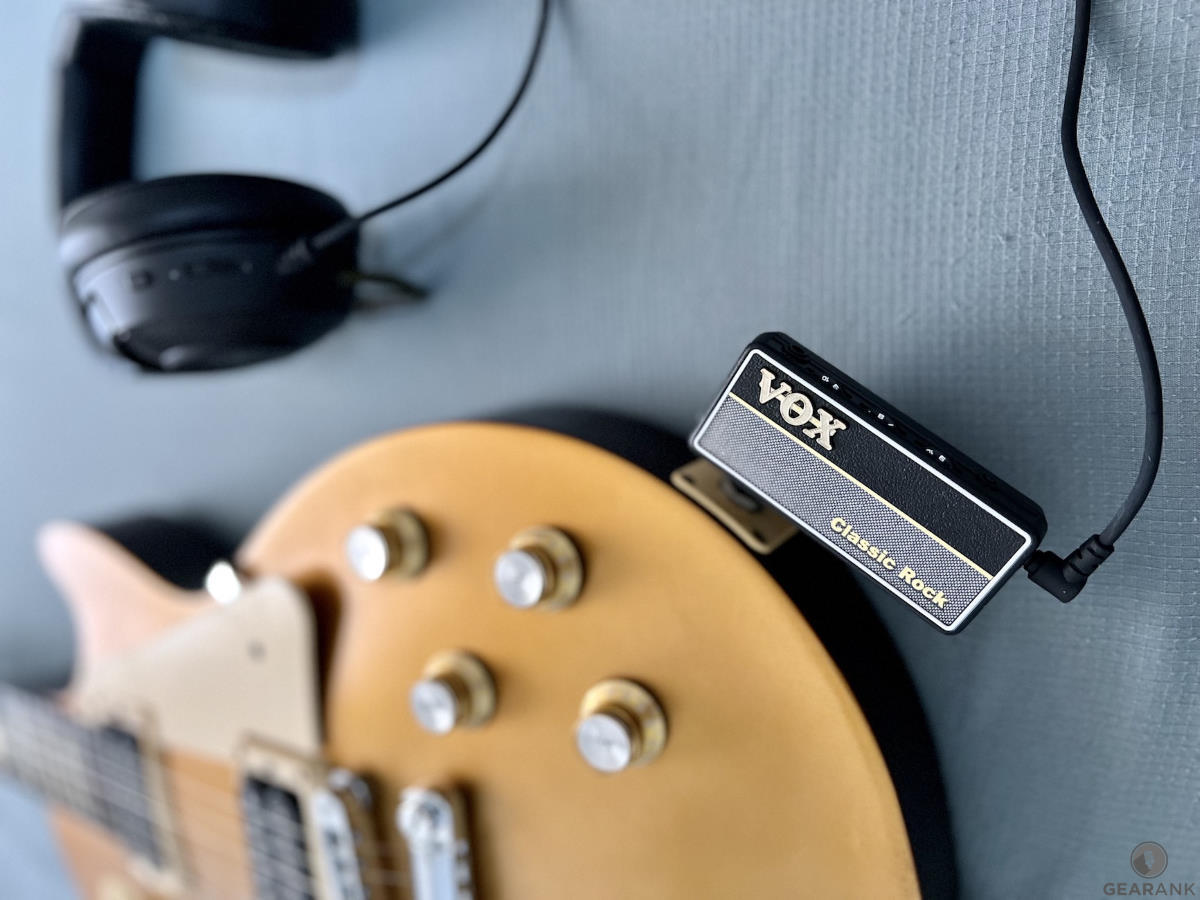
Being a guitarist and a dad, I often practice quietly by plugging headphones straight to my guitar processors. While this system works, sometimes I end up not practicing because I can't be bothered with the task of setting up the space and cables needed. Dedicated guitar headphone amplifiers like the Vox amPlug Classic Rock is a game changer in this regard, it allows me to practice virtually anywhere without the need for setting up space and cables.
Contributors
Jason Horton: Editing and Illustrating.
Media
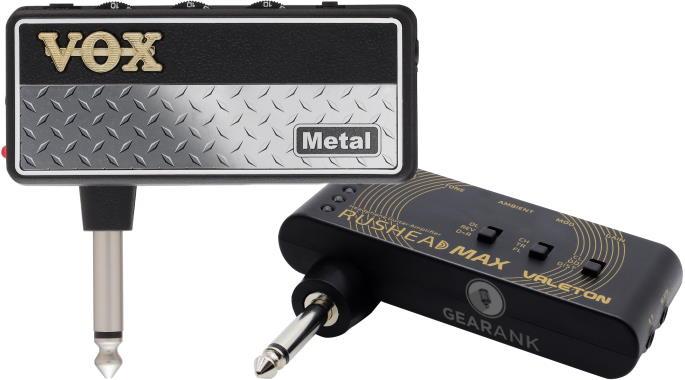
Main/Top Image: Produced by Gearank.com using photographs of the Vox amPlug 2 Metal and Valeton Rushead Max.
The videos above have been embedded in accordance with YouTube's Terms of Service.
The individual product images were sourced from websites, promotional materials or supporting documentation provided by their respective manufacturers.
Comments
Publication of the June 2022
Submitted by Jason Horton on
Publication of the June 2022 Edition resulted in the following items being removed from the recommended list above:
Our January 2021 update
Submitted by Jason Horton on
Our January 2021 update resulted in the following coming off the recommended list above, but you can still see our analysis of them:
As a result of our February
Submitted by Jason Horton on
As a result of our February 2020 update the following came off the recommended list above but you can still read our analysis of it: Vox amPlug 2 Clean.
Today we removed the
Submitted by Jason Horton on
Today we removed the following item from our recommended list above due to a lack of availability, but you can still read our analysis of it: Zoom G1Xon.
My favorite is the NUX PG2.
Submitted by John (not verified) on
My favorite is the NUX PG2. They are cheap and all the fx sound good. Easy to use to. Actually prefer over the basic POD
The PG-2 does have some good
Submitted by Jason Horton on
The PG-2 does have some good reviews, but we haven't short-listed it because the manufacturer has discontinued production.
Had two VOXs, had. They are
Submitted by Les (not verified) on
Had two VOXs, had. They are cheap made and break easy. Need one with a metal case for a mobile device.