
Electric Guitar Guides
Disclosure
As an Amazon Associate we earn from qualifying purchases.
Further information is in our Privacy Policy.
DIY electric guitar kits, let you build and customize your own electric guitar without the need to start from wood planks, and without the hassle of matching specs, electronics and hardware. Here we look at the best of them based on actual market feedback.
These kits come with bodies and necks that are already pre-shaped and pre-drilled for easy assembly, all that’s left to do is to use your creativity to apply a nice looking finish.
DIY electric guitar kits are often used by experienced builders as base for their project guitars, where they thinker with the electronics and hardware. These are also affordable entry ways into guitar customization and building.
The top rated kits for this edition cover many of the most popular guitar shapes and configurations, which we hope will address your preference. With this guide, you won’t have to build your signature instrument from scratch, like Brian May’s dad, who built the iconic “Red Special” guitar from wooden tables.
The Best DIY Electric Guitar Kits
| Gearank* | SRC* | Check Price | ||
|---|---|---|---|---|
 | BexGears DIY Electric Guitar Kit S-Style | 88 | 400+ | |
 | BexGears DIY Electric Guitar Kit - LP Style | 87 | 150+ | |
 | BexGears DIY Electric Guitar Kit - SG Style | 85 | 100+ | |
 | TheFretWire DIY Electric Guitar Kit TFW026 - Mos Style | 84 | 10+ | |
 | StewMac S-Style | 87 | 70+ |
Author & Contributors
Alexander Briones
I have been writing about and researching music gear for many years, all while serving as a music director at my local church. I engage in guitar playing and singer-songwriter stints, in addition to mentoring young musicians and teaching guitar and bass.
BexGears DIY Electric Guitar Kit S-Style
This is an affordable DIY guitar kit that is based on the popular Stratocaster.
It has the same familiar looking double cutaway body, but instead of alder, this one is crafted from okoume. Note that the body is unfinished, which means that you can give it the finish and polishing that you prefer.
The body is paired with a maple neck with composite fingerboard, and comes with all the necessary routings for assembly.
It also comes with a white pickguard along with traditional Strat style triple singlecoil SSS pickup configuration, selector and control setup.
Finally, it also comes with all the necessary hardware including tuners, bridge, and more.
Features:
- Building Difficulty: 5/10
- Body: Stratocaster
- Tonewood: Okoume
- Neck: Maple
- Fingerboard: Composite
- Pickups: SSS (Three Singlecoils)
- Controls: Volume, 2 x Tone, 5-way Pickup Selector
Pros
Value for money is the main reason why this S-style kit is rated highly, with many stating that the quality of the included components exceeded their expectations. Wood quality also gets a lot of thumbs up, along with having proper pre-drilled assembly holes., which make it very easy to setup. Users describe it as a fun project guitar kit.
Cons
There are a few who aren't too happy with some of the included hardware.
Overall
If you're looking for an affordable Strat stye kit, then this is a good place to start your search.
BexGears DIY Electric Guitar Kit - LP Style
For a relatively unknown brand, BexGears kits are currently getting good reviews. This one lets you build your own single-cutaway Les Paul style guitar.
It's interesting to see the many different ways users have custom finished its pre-drilled okoume body - there are some great pictures and videos in Amazon's Reviews.
The neck is crafted from maple, and features a 22-fret fingerboard made from composite material.
Also included in this kit are two humbuckers along with LP style electronics, controls, and all the required hardware.
Features:
- Building Difficulty: 4/10
- Body: Les Paul
- Tonewood: Okoume
- Neck: Maple
- Fingerboard: Composite
- Pickups: HH (Dual Humbuckers)
- Controls: 2 x Volume, 2 x Tone, 3-way Pickup Selector
Pros
"Better than expected" is a good summary of market sentiment towards the BexGears LP style DIY guitar kit. This is especially true of the neck, which impresses a lot of owners. The body is also well loved, as can be seen in the many owner submitted images that feature a wide variety of different finishes. The quality of the pickups and all the hardware also gets a lot of thumbs up, described by many as a good entry-way into custom project guitars.
Cons
Lack of instruction manual is the main issue that caused some users to rate this kit slightly lower. There are also some who recommend replacing the pickups.
Overall
Being the highest rated LP-style kit in the market, this is an easy pick for those who want to make this particular design the basis for their personalized instrument.
BexGears DIY Electric Guitar Kit - SG Style
Another BexGears DIY kit makes it to this list, this one bundled specifically to let you assemble or mod your own SG style electric guitar.
The body of this kit is crafted from okoume, shaped into the familiar twin horn SG style cutaway and pre-routed for easy assembly.
It has a maple neck with composite fingerboard that comes with trapezoidal inlays.
Finally it comes with two humbuckers, 3-way pickup switch, two volume and two tone knobs, along with all the necessary electronic components and hardware to fully assemble the guitar.
Features:
- Building Difficulty: 4/10
- Body: SG
- Tonewood: Okoume
- Neck: Maple
- Fingerboard: Composite
- Pickups: HH (Dual Humbuckers)
- Controls: 2 x Volume, 2 x Tone, 3-way Pickup Selector
Pros
A common theme among BexGears kits is that people love the quality of the wood used for the body, even more so for the neck. Many also find the pre-routings to be of good quality and alignment, which helps in making assembly easier. There are a good number of owners who find the SG shape to be on point, inspiring many users to apply traditional finish colors to make the kit look more like a factory built SG than a custom one.
Cons
Speaking of wood, this kit does not come with traditional mahogany body and neck that's usually associated with Gibson SG. There are some who are not impressed with the included hardware, a few of them recommend replacing all of them for best results. There are also some who complain about the lack of instructions for building.
Overall
If you're a fan of the SG style and want to make it your own, then this is a good kit to consider.
TheFretWire DIY Electric Guitar Kit TFW026 - Mos Style
The TFW026 is a guitar kit inspired by the Mosrite Venture, a guitar that looks like a modified Telecaster with SH pickup configuration.
It features a pre-sanded alder body that follows the Mosrite's offset double cutaway shape.
All the needed routings are already done for quick installation of its humbucker neck, singlecoil bridge pickup, included electronics and hardware.
The neck is crafted from maple, and topped by a 22-fret rosewood fingerboard.
Features:
- Building Difficulty: 4/10
- Body: Mosrite
- Tonewood: Alder
- Neck: Maple
- Fingerboard: Rosewood
- Pickups: SH (Singlecoil Bridge, Humbucker Neck)
- Controls: 1 x Volume, 1 x Tone, 3-way Pickup Selector
Pros
Its distinct visual appeal makes this kit easily standout, which for many is the main reason they build affordable custom guitars - to get the look that they want. Combining a humbucker with a singlecoil pickup is another important factor that makes this kit appealing. Many also describe the build process as fun and easy, and the body shape makes this kit look good with virtually any color or style of finish.
Cons
Some users recommend swapping out the singlecoil pickup with a lipstick style pickup, while a few comment that only the wood is worth using.
Overall
If you're tired of popular guitar shapes and want a kit that will let you build something distinct yet still familiar, then this is for you.
StewMac S-Style Electric Guitar Kit
Here's another Strat style kit, this time from StewMac, one of the most prominent brands when it comes to guitar parts and DIY kits.
Like other Strat style kits, this one is aimed at beginners who want to start with something easy to build.
What makes this one different is the use of mahogany for the body, which is a departure from the usual alder or basswood body used on Strats. The body comes pre-drilled for parts to fit in, including the neck joint for the guitar's maple neck to easily be bolted into.
The headstock is not prerouted to shape, which gives you more leeway to customize it to your preference.
Other hardware includes tuners, bridge and tremolo bar, pre-wired pickguard, guitar cable, and it even comes with 2 sets of strings.
Features:
- Building Difficulty: 5/10
- Body: Stratocaster
- Tonewood: Mahogany
- Neck: Maple
- Fingerboard: Maple
- Pickups: SSS (Three Singlecoils)
- Controls: Volume, 2 x Tone, 5-way Pickup Selector
Pros
Most of the positive comments about this kit point to the quality of the wood. Second to that is the precision of the pre-drilled holes, making for a very easy build. Fret work and Neck Profile also gets commended.
Cons
Complaints are due to the usual DIY guitar kit issues, missing parts, and bad tuning pegs.
Overall
With StewMac's reputation for good quality, this is a DIY guitar kit that you will surely appreciate.
Things to Consider When Buying a DIY Guitar Kit
Style/Profile
The whole point of having a DIY guitar kit is to build a guitar that you like, so make sure that you get one with your preferred shape and profile. Kits with classic guitar body shapes are the safest choice, as evidenced by their continued popularity in the market. But you don't have to limit yourself with just the familiar, spend time looking at other designs to see if you're missing out on something cooler, something that better matches your personality. Also looking into Left Handed vs Right Handed Guitar options.
Wood Quality and Parts Alignment
While we did our best to pick only top-rated kits, we know that in our less-than-ideal world, things can and will go wrong. So it is imperative to check wood quality and the alignment of the pre-drilled holes. It is the first thing to do if you have just received your DIY guitar kit from an online retailer. Note that the body included in most DIY kits are unfinished, so it will be up to you to learn the ropes of wood finishing and Guitar Painting, and more importantly to utilize your creativity in getting the look that you desire.
Build Difficulty
Compared to building something from scratch, building a diy guitar kit listed here is relatively easy. Still, there are some that require more patience and experience, like those with set-necks and hollow bodies. On the flipside, there are kits that make life easier for you with their no-soldering required electronics and bolt-on necks. It is recommended that beginners go for easier builds, but with so much information available online, it should not hinder you from getting what you really want - just make sure to be patient and do your homework. I have yet to see a DIY Neck Through Guitar, because it may be too complex for non-professionals.
Tools
Before taking the plunge, make sure that you have the necessary tools to build the guitar of your dreams. Most kits will require you to have screwdrivers, pliers and soldering iron for the assembly process. While others require more, like wood glue, bandsaw and other wood routing tools. Once you've decided on the finish, you'll also have to get finishing tools like sandpaper, wood sealant, primer, paint and more. It is also recommended to have a dedicated room or space for you to work on, a nice working table will also make work a bit more easier.
Upgrade Options
No matter how we try to dodge the reality of mass production, at the end of the day, you will get what you pay for. So it is best to consider possible hardware upgrade options that will improve tone and playability. Most reviewers got great results by swapping out the bundled pickups to a best cheap guitar pickup, while others have opted to replace the tuners and nut. Replacing the included hardware is also what makes these DIY kits fun for some, allowing them to thinker with the build a bit more.
Before putting together your best DIY guitar kit you should look at the tips for buying an affordable electric guitar, to get some ideas.
DIY Electric Guitar Kit Selection Methodology
The first edition was published in 2017.
At the onset, we decided to stick to DIY electric guitar kits that can be bought from online retailers based in the USA, to ensure that the ones we recommend are accessible. We then took note of popular and highly rated kits, which required us to analyze over 1100 relevant user and expert reviews and ratings. All these data were fed into the Gearank Algorithm, which gave us the rating scores our of 100 that allowed us to narrow down the list to just the top kits. For more information about our methods see How Gearank Works.
About the Author and Contributors
Here are the key people and sources involved in this guide's production - click on linked names for information about their music industry backgrounds.
Lead Author & Researcher
Alexander Briones
I have been writing about and researching music gear for many years, all while serving as a music director at my local church. I engage in guitar playing and singer-songwriter stints, in addition to mentoring young musicians and teaching guitar and bass.
Drawing from his experience in performing and recording, he teaches guitar and bass and mentors young artists to be better musicians. And when he is not busy playing or tinkering with musical gear, he puts on his entrepreneurial hat, which helps fund his passion for collecting guitars, mecha figures and Gunpla kits.
Contributors
Jason Horton: Editing and Illustrating.
Media
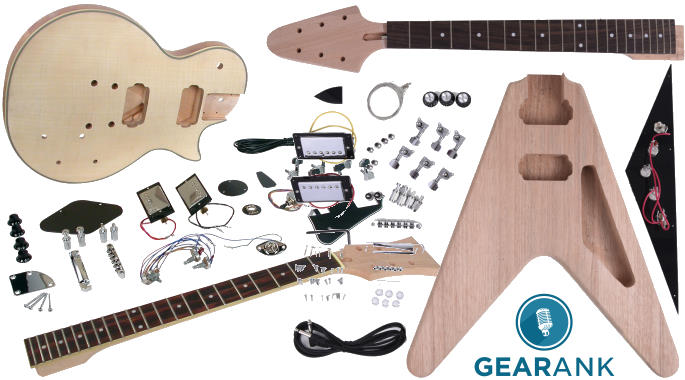
Main/Top Image: Compiled using photographs of the Saga LC-10 and Ammoon V-Style.
The individual product images were sourced from websites, promotional materials or supporting documentation provided by their respective manufacturers.







We’ve removed the TheFretWire DIY Electric Guitar Kit TFW027 – W Style due to it being discontinued.
We have removed the following kit due to being discontinued: TheFretWire DIY Electric Guitar Kit TFW010 – Double Cut
We have removed the following kit due to being discontinued: TheFretwire DIY Electric Guitar Kit – LP Mahogany.
Publication of our May 2021 edition resulted in the following kits coming off the recommended list above, but you can still see our analysis of them:
I am looking for 2 different ones. I want to get a Mosrite Ventures kit, and also a very good Stratocaster kit. Thanks, send me an email about which site I can find them on. I have not seen the Mosrite at all yet.
Hi Michael,
We don’t send out emails, instead we publish our recommendations in the guide above.
We don’t have any Mos style options on our recommended list at present, and the Strat style kits we currently recommend are the ones you see above.
Jason.
So, these kits cost the same as an entry-level Ibanez. Would a new entry-level Ibanez Gio have better neck & fret quality than these cheap kits? Would the Ibanez have better tuners and pickups? You see, I’m not sure if I’m paying for the privilege to assemble a guitar, or saving money by assembling myself. The first would mean the Ibanez is better. The second would mean the kit is better. Thanks to COVID I can’t go to my local music store and look at an Ibanez Gio myself 🙁
Brian May and his father hand built his guitar and it became the famous Red Express giving Queen their iconic guitar sound.
If you’re buying a kit then the presumption I think, is that you have a little know how with some hand tools. Being able to construct, setup and finish your own piece is highly satisfying! It really has nothing to do with making a cheap purchase and comparing a/b. I buy parts and put guitars together all the time with various degrees of success but boy is it fun!!
I actually just bought a Gio. Specifically a GRG7221QA (7-string). Paid £194. And surprisingly its pretty well made. The body/neck fit is is excellent and the body feels solid and the neck is sublime (typical Ibanez). It’s let down by awful pickups and pots. I put in some Dimarzio D-activators and CTS pots and boy oh boy, this guitar can now sing and scream like guitars four times the price. I’d like to build a kit one day and I figure that if the wood is up to spec then I can slap in some quality pickups and have an amazing guitar. The Gio is a lot less work though…
Guitar kits can be thought of as a way to have a lot of fun putting your own personalized guitar together, where quality is in no small part up to you, rather than as a way to save money.
If this doesn’t seem like a fun DIY project for you, then you’re probably better off going with an Ibanez GIO GRX20Z, which is an excellent choice that last year we announced was the Highest Rated Solidbody Electric Guitar Under $200.
As a result of our October 2019 update the following guitar kits came off our recommended list above, but you can still see our analysis of them:
Kit guitars are the way to go today. Build to your preference and to your standards. Like, feel love music and equipment.
For reviews and building tips I suggest the you-tube channel Guns and Guitars. He’s built quite a few kits and also shows how to make some helpful tools that can save a few bucks.
As a result of our March 2018 update the following guitar kits were removed from the recommended list above:
Can u get the amino flying v kit with block inlays in the neck and is it set neck or bolt on? Thank u..
It seems that the Ammoon Flying V kit is sold out – I had a look around but couldn’t find any Flying V kits that are available at the moment.