
Are you craving a tube amp’s rich, dynamic sound at lower volumes? Look no further! We’ve curated a selection of the best low watt tube amp options, each meticulously chosen for its exceptional tone, versatility, and value.
Disclosure
We recommend all products independently of 3rd parties including advertisers. We earn advertising fees from:
• • • • •

• • • • •
Amazon
As an Amazon Associate we earn from qualifying purchases.
• • • • •
More Guitar Amps
You can achieve good tube tone at more room-friendly volume levels thanks to great-sounding low-watt tube amps. These authentic and rich-sounding tube amps have lower headroom, driving the tubes to saturation without being obnoxiously loud.
A cranked 15W tube amp can give you great tones at volumes that are perfect for recording and practice. Tube amps with lower power ratings can go even quieter.
Here, we feature our top picks from among the top-rated tube Combo and Amp Heads.
We’ve also included detailed specifications, along with their unique features, pros, and cons,
In addition to sounding good at manageable volume levels, these small tube amps have fewer components, making them lighter and more cost-effective. These practical advantages have made low watt tube amps a sensible choice for many guitarists.
Read on to find the best small tube amps / low watt tube amps for your needs.
Our Best Low Watt Tube Amp Picks
| Gearank* | SRC* | Check Price | ||||||
|---|---|---|---|---|---|---|---|---|
| Best Low Watt Tube Amps - Combo | ||||||||
 | Fender '57 Custom Champ 5W | 97 | 350+ | |||||
 | Vox AC15C1 15W | 95 | 1350+ | |||||
 | Fender '57 Custom Deluxe | 95 | 150+ | |||||
| Best Small Tube Amp - Budget Combo Amp | ||||||||
 | Monoprice 611705 5W 1x8" | 90 | 1000+ | |||||
| Best Low Watt Tube Amp Heads | ||||||||
 | Egnater Tweaker 15W | 96 | 275+ | |||||
 | Orange Dark Terror 15W | 94 | 325+ | |||||
 | Orange Rocker 15 Terror | 95 | 175+ | |||||
 | EVH 5150III LBX-S | 94 | 80+ | |||||
| Best Small Tube Amp Head - Budget | ||||||||
 | Bugera T5 Infinium 5W | 89 | 325+ | |||||
Best Low Watt Tube Amps - Combo
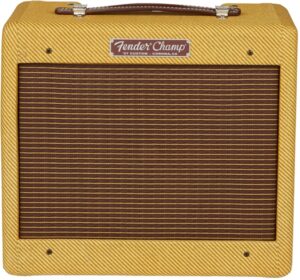
Fender '57 Custom Champ 5W 1x8"
Cons
- Not enough volume for jams or gigs
- Pricey for a 5 Watt tube amp
Pros
- Genuine vintage Fender tone
- Ideal volume for practice and recording
- Premium build and sound quality
- Compact profile
Since 1948, the Fender Champ 5 Watt tube amp has been a practice and recording standard for many blues and country artists.
It's been used on several iconic recordings such as Eric Clapton's "Layla," Joe Walsh's "Rocky Mountain Way," Aerosmith's "Shame, Shame, Shame," and ZZ Top's "La Grange."
Many players of this generation, like jazz guitarist Julian Lage, have also found their voice in the Champ. It's one of the most instantly recognizable small Fender amplifiers.
This valve amp is a custom shop reproduction of a vintage Fender Champ, so build quality is top-notch. It also means that it hits the mark regarding tone, albeit at a higher price tag. Even the Weber speaker is designed primarily to be as accurate to the originals as possible.
This small Fender amp also comes with a tube rectifier. A rectifier converts electricity between AC and DC (most rectifiers are currently solid state). This helps produce the compressed tone and "bloom" common with these designs.
At 5 watts, it is not intended to be a main stage amp, although there have been acts that use it live by miking it up. It is one of the smallest and lowest in wattage on our recommended list.
The 57' Custom Champ also competes as the best low watt tube amp for recording. It gives you a big-league tweed tone in a small Fender amp.
This experience is usually reserved for those who can pay top dollar for a vintage model. The 57' Custom Champ is the best 5 Watt tube amp in this price range. It makes the classic tone more accessible for those who want to plug in and play.
It may not be enough for a loud band in live use. But for practice, recording, or playing a light jazz gig, the 57' Custom Champ is a small tube amp that packs a punch. You don't have to be a fan of Fender amps to appreciate this highly-rated amp.
Specifications
- Power Rating: 5-Watts
- Preamp Tube(s): 1 x 12AY7
- Poweramp Tube(s): 1 x 6V6
- Speaker: 1x8” Weber Special Design with Alnico Magnet
- Cabinet: Open
- Controls: Volume
- Input(s): Normal, Bright
- Output(s): N/A
- Weight: 15 lbs
- Suitable for: Classic Rock, Blues
| Website | Source | *Rating Value |
| Premier Guitar | Editor | 100/100 |
| YouTube | Rich Bischoff | 100/100 |
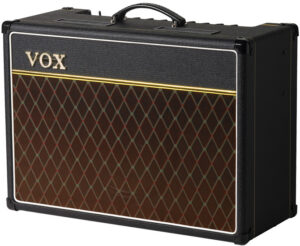
Vox AC15C1 15W 1x12"
Cons
- Can be too bright
- Not loud enough to be main gigging amp
Pros
- Good Pedal platform and overdrive friendly
- Subtly modified Vox AC15 tone
- Vintage appeal
- Simple operation
The AC15 is the quintessential Vox guitar amp and arguably the sound of the 60s British Invasion. Its bigger brother, the AC30, was designed to compete with the growing stage (and crowd) volumes. At the same time, the small but powerful voice of the AC15 gave rise to many electrified groups in the 60s.
Today, this tube amp retains the Class A flavor it is famous for while employing more consistent construction and materials. It has a bright voicing that can be too bright for some. Thankfully, it has a tone cut control that lets you shave off excess highs.
The Greenback speaker gives a more modern tube amp sound than vintage Vox amps. This gives it a tighter bottom end. It still has the same clarity and chimey tone as the original but is more open and overdrive-friendly.
This makes the AC15C1 more versatile than what you'd expect from a vintage AC15. For a more traditional sounding speaker, look at the AC15C1X instead.
It can get quite loud for a 15-watt amp, but driving this amp too much is not advisable, as it loses some of its clarity at high volumes. If you need more projection, you'd better go for the more powerful AC30 version.
Overall, the AC15C1 is the best low watt tube amp for fans of Vox Tone. It has everything you need for a vintage 60s-style tone. From The Beatles to The Shadows and beyond, many classic sounds can be achieved with reverb and tremolo. It's the best clean amp for modern indie rock chime and jangle.
Specifications
- Power Rating: 15-Watts
- Preamp Tubes: 3 x12AX7
- Poweramp Tube(s): 2 x EL84
- Speaker: 12” Celestion G12M Greenback
- Cabinet: Open
- Controls: Master Volume, Master Tone Control, Tremolo Depth, Tremolo Speed, Reverb Level, Top Boost Bass, Top Boost Treble, Top Boost Volume, Normal Volume
- Input(s): Normal, Top Boost
- Output(s): External speaker Jack, Extension Loudspeaker Jack
- Weight: 48.5 lbs
- Suitable for: Classic Rock, Blues, Indie, Alternative
| Website | Source | *Rating Value |
| YouTube | Jack Fossett | 96/100 |
| The Gear Page | guitkrazy | 98/100 |
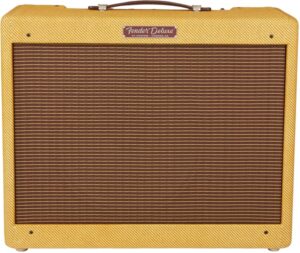
Fender '57 Custom Deluxe
Cons
- Limited tone options
- The lows can be a bit muddy
Pros
- Gorgeous cleans even at high volume
- Nails the Fender Tweed tone
- Tuch sensitivity is comparable to vintage Fender tweed amps
- Easy to use and get great tones out of
As a long-time Fender Strat user, I get a kick out of the clean tone of the '57 Custom Deluxe. It adds the subtle grit and coloration that produces the unmistakable tweed sound that I dig.
On top of its great-sounding default tone, it's a very expressive amp, reproducing all the nuances of your playing with incredible detail. Whether gently fingerpicking or digging into aggressive blues riffs, it faithfully translates your playing dynamics into rich, expressive tones. And while tone is limited, you do get essential controls with the volume and tone knobs.
Interestingly, it has a Mic volume knob that you can use as a pseudo-tone control for the guitar plugged into the instrument input. This allows you to lessen saturation for more clean clarity.
The 12-watt output may seem modest, but keep that from fooling you; the '57 Custom Deluxe packs a punch, offering ample volume for studio recording and small venue performances.
While the '57 Custom Deluxe excels in delivering pristine Fender cleans and smooth breakup, it may lack the high-gain saturation desired by some modern players. Its vintage-style aesthetics and construction may not appeal to those seeking a more contemporary look and feel.
However, if you are searching for a timeless tone and classic Fender vibe like me, the '57 Custom Deluxe is an excellent choice, blending vintage charm with modern performance capabilities.
Specifications
- Power Rating:12-Watts
- Preamp:1 x 12AY7, 1 x 12AX7
- Poweramp:2 x 6V6 Power tubes, 1 x 5Y3 Rectifier
- Rectifier:Tube (1 x 5Y3)
- Speaker:1x12" 8 ohm Eminence Special design Alnico speaker
- Input:2 x 1/4" (instrument), 2 x 1/4" (mic)
- Output:2 x 1/4" (including internal speaker)
- Cabinet:Open
- Main Controls:2 x Volume, 1 x Tone
- Equalizer:None
- Weight:26 lbs.
Best Small Tube Amp - Budget Combo Amp
Monoprice 611705 5W 1x8"
Cons
- Limited features
- Not enough projection for band rehearsals and stage use
Pros
- Great value low-watt tube amp
- Good sounding classic gain tube tone
- Old school operation
- Built-in power rating control
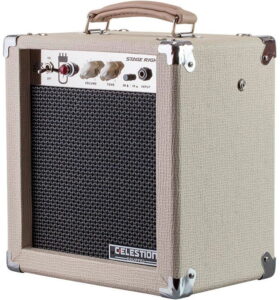
The Monoprice Stage Right 611705 is a compact 5-watt tube amp with similar innards to the iconic Fender Champ but more affordable.
This small tube amp sports a 12AX7 preamp tube and a 6V6GT power tube, and it drives an 8" Celestion Super 8 speaker. This combination gives you genuine tube amp tones that you can enjoy at lower volumes and a substantially lower cost.
This 5Watt amp only has two knobs, volume and tone. The tone behaves like an EQ, while the volume knob serves as the gain knob. Like old tube amps, raising the amp's volume knob adds grit and overdrive to the tone. You can then clean up the tone by dialing down the volume knob on your guitar.
To avoid being a straight-up clone, it has a distinct "input selection switch." It works like a power attenuator but with a twist. The switch lets you choose between 5-watt and 1-watt power ratings.
The 5-watt tube amp setting is easier to overdrive and has restricted lows to reduce low-end "mud." The 1-watt tube amp setting has a full range of clean sounds.
Given its 5-watt rating, this amp is meant for more intimate use, like quiet practice and recording. It doesn't have enough volume for rehearsals, let alone stage use. Don't let this discourage you; I still think it's the best tube amp for home use.
This guitar combo amplifier is housed in a cabinet with a rear port. And it comes with simple vintage-style aesthetics.
Don't expect cheap tube amps to have premium components and hand wired circuitry. But for the price, you really get quite a lot of value.
All these perks and quirks make it the best low watt practice amp at this price point. And it helps that it's one of the cheapest tube amps in the market.
Specifications
- Power Rating: 5 Watts
- Preamp Tube(s): 1x ECC83/12AX7
- Poweramp Tube(s): 1x 6V6GT
- Speaker: 1 x 8” Celestion Super 8
- Cabinet: Open Back
- Controls: Volume, Tone, Power Attenuator (5W/1W)
- Input(s): 1/4"
- Output(s): External Loudspeaker Jack
- Weight: 13.2 lbs
- Suitable for: Rock, Blues, Indie, Alternative
| Website | Source | *Rating Value |
| YouTube | Landon Bailey | 90/100 |
| YouTube | Uncle Doug | 90/100 |
Best Low Watt Tube Amp Heads
Egnater Tweaker 15W
Cons
- No preset management
- Single channel
- No effects
Pros
- Real tube and analog circuitry
- Highly customizable tone
- Multiple amp voicings
- Classy aesthetics
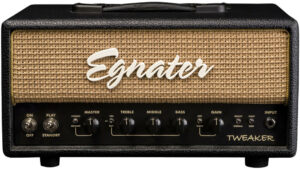
For Bruce Egnater, the tone stack is the number one influence of a guitar amplifier's tone. The Egnater Tweaker series was initially planned to be a modular amplifier with different swappable components.
Bruce Egnater used toggle switches down the line to enable the user to choose between a British, American, or AC (Marshall, Fender, and Vox, respectively) tone stack. In addition, A "vintage/modern" switch, a "normal/bright" switch, and a "tight/deep" switch provide additional options for tonal customization.
Tone customization is exactly what this amp is for, allowing for a wide range of parameter control while retaining genuine tube and analog circuitry. More importantly, all the tones and voicings sound good and respond well. The Tweaker 15W does all this while retaining a small profile and a very accessible price tag. The 15-watt amp also looks classier than it is.
Being a single channel amp with no digital brain. So, there is no amp modeling, channel switching, or preset management. This means that there is no way to change the amp voicing instantly. This limits its versatility in live performances but isn't much of an issue when recording or practicing.
If tone customization is high on your list, and you want to do so without using digital technology, then the Egnater Tweaker head is for you. It's the best clean amp to use as a pedal platform.
Specifications
- Power Rating: 15-Watts
- Preamp Tube(s): 3 x 12AX7
- Poweramp Tube(s): 2 x 6V6
- Controls: Master Volume, Gain, Bass, Mid, Treble, Voicing Switch
- Input(s): Normal
- Output(s): Main Speaker Out, Extension Speaker Out (for a second cabinet)
- Weight: 19.6 lbs
- Suitable for: Classic Rock, Blues, Indie, Alternative
| Website | Source | *Rating Value |
| MusicRadar | Nick Guppy | 100/100 |
| Premier Guitar | Shawn Hammond | 90/100 |
Orange Dark Terror DA15H 15W
Cons
- Single channel only
- Shape control limits tonalities
Pros
- Great heavy tones on stage and in the studio
- Good clean tone
- 15 watt amp that's loud enough to keep up with drummers
- Very portable
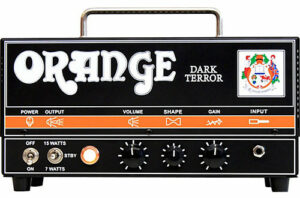
The Dark Terror is a compact, 15/7W all-tube amplifier designed for heavier, saturated tones. It is excellent in the studio for getting more power amp saturation without overloading more sensitive mics like condensers.
The preamp has four stages of gain, like many modern high-gain tube amps, while maintaining the ethos of being able to drive the power tubes at lower preamp gain settings.
True to the Terror line, this amp features a minimal control setup. It's a single channel amplifier with Volume and Gain controls that interact with each other to achieve specific tones.
The shape knob takes the place of the typical 3-band EQ. It combines treble and bass control with a surprisingly wide range. It can go from dark, Sleep-esque tones to scooped, old-school metal and everything in between.
What really surprised me was how good the clean tones were. They aren't pristine Fender cleans, but they have a lot of vibe and feel relaxed like many high-gain amps' clean channels. The Dark Terror can be used with digital reverb and delay pedals for atmospheric cleans in conjunction with the effects loop.
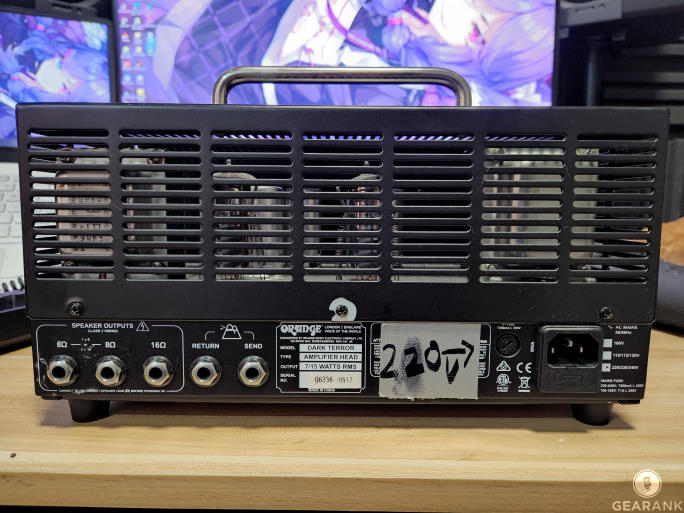
A rearward view of the Dark Terror. Visible through the grille are the amps' tubes. I marked the voltage for this amp on duct tape to make it easier for on-stage techs to see.
All that being said, the Dark Terror is still just a single channel amplifier. To get to the clean tones, you must either roll down the volume on your electric guitar or settle with one gain setting throughout. While intuitive, the Shape control can be limiting in terms of very specific tonal settings.
I would have loved to have even a 2-band EQ in place of the shape knob. For those that rely on a clean tone, the headroom of the 15-watt amp is limited at lower gain settings. This head was made to rock out, so if you're looking for a clean pedal platform, look elsewhere.
The Dark Terror was designed to have a tube buffered effects loop between the preamp and power amp stages. Since the Terror series relies a lot on power amp saturation, the Dark Terror adds a few more gain stages in the preamp to keep the power section clean enough for delays and modulation.
The Orange Dark Terror is a funny little thing. It's aggressive but can also be pristine at recording volumes. For live use, it's all out or get drowned. It can easily keep up with heavy-hitting drums on higher gain settings, especially when pushing the power amp, but it might not be adequate for cleans.
Where it shines is getting that saturated chug in the studio at volumes that won't shake the walls. Among small tube amplifiers, this controlled chaos makes the Dark Terror a must-have in your amp arsenal.
Specifications
- Power Rating: 7 to 15-Watts
- Preamp Tube(s): 3 x 12AX7
- Poweramp Tube(s): 2 x XEL84
- Controls: Gain, Shape, Volume
- Input(s): Normal
- Output(s): 8ohm, 16ohm, 2x16ohm
- Misc:Tube Buffered Effects Loop
- Weight: 12.46 lbs
- Suitable for: Modern Rock, Alternative, Punk, Metal
| Website | Source | *Rating Value |
| Gearank | Raphael Pulgar | 96/100 |
| Premier Guitar | Jordan Wagner | 90/100 |
| YouTube | Plague Scythe Studios | 89/100 |
Orange Rocker 15 Terror
Cons
- Clean channel is too neutral sounding
- Limited controls
Pros
- Genuine Orange warm crunch tone
- Thick saturated high gain tones
- Good platform for pedals
- Responsive controls
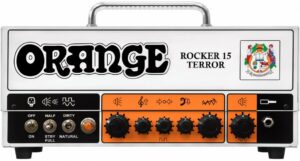
The Rocker 15 terror is a lunchbox-sized amp head with true 2-channel operation, melding aspects of the Tiny/Dual terror and the higher gain Rockerverb.
The clean channel is a straightforward clean-to-grit affair with no other controls except volume. Its warmth allows it to be a good platform for pedals.
Channel 2 has a three-band equalizer that goes from light crunch to thick, sludgy doom metal tones. At lower gain settings, the warmth of the crunch is unmistakably Orange, but this 15-watt amp bares its fangs at higher gain settings.
Unlike other high-gain amplifiers that focus on tight modern metal, the Rocker 15 Terror sounds more along the lines of early Sabbath and other saturated 70s metal tones. Modern incarnations of sludge and doom metal are more in line with the brand of tone the Rocker 15 presents.
Warmer-sounding modern rock tones are also easily achievable via the controls. Controls are limited, but they are very responsive especially the EQ. This allows for good tone shaping right on the amp.
Those who prefer tighter tones will not be too happy with the Rocker 15 Terror's loose feel with palm mutes. And while the neutral-sounding clean tone is good for pedals, it's too plain-sounding for those who prefer sparkling cleans.
It also features a tube buffered effects loop to incorporate other pedals like reverb and delay without saturating the preamp.
The Rocker 15 Terror lives up to its name: it was made to do rock, and it does so exceedingly well. This is the amp to get if you want a low-watt amp that gets your "nasty face" on doing big classic rock power chords.
Specifications
- Power Rating: 7 to 15-Watts
- Preamp Tube(s): 3 x 12AX7, 1 x 12AT7
- Poweramp Tube(s): 2 x XEL84
- Controls: Channel 1 - Volume, Channel 2 - Volume, Bass, Mid, Treble, Gain
- Input(s): 1 x 1/4", 1 x 1/4" (channel)
- Output(s): 2 x 1/4" (8 ohm), 1 x 1/4" (16 ohm)
- Misc: Tube Buffered Effects Loop
- Weight: 14.1 lbs.
- Suitable for: Modern Rock, Alternative, Punk, Metal
| Website | Source | *Rating Value |
| Guitar Interactive Magazine | Editor | 100/100 |
| Guitar.com | Richard Purvis | 80/100 |
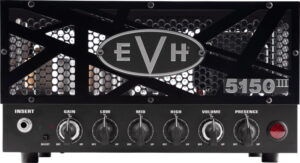
EVH 5150III LBX-S
Cons
- Sound can get buried by aggressive drum playing
- Clean tone is not its strong suit
Pros
- Has a lot of gain. Can easily do without a distortion pedal
- Good note clarity even at high-gain settings
- Great for home practice
The EVH 5150III LBX-S Amp carries the legacy of its namesake, Eddie Van Halen, whose pursuit of tone perfection and innovation revolutionized rock guitar playing. This compact amplifier inherits the renowned 5150 series lineage, offering high-gain tones and aggressive sound in a more portable profile.
As expected, the 5150III LBX-S delivers a relentless onslaught of high-gain saturation, courtesy of its all-tube design. The sound you'll get can handle the typical needs of rock music, from mid-gain crunch to high-octane distortion for heavy riffing and searing lead lines. It provides all this while aggression while maintaining clarity and note definition.
For its size, it also has a good and responsive set of EQ (tone controls) and a two-channel setup, which gives room for tone personalization.
This amplifier offers 15 watts of pure tube power and is suitable for stage and studio applications. Its compact size belies its formidable capabilities, allowing for effortless transport and setup wherever your music takes you.
One of the standout features of the 5150III LBX-S is the addition of a built-in noise gate, which ensures a quiet signal path even at high-gain settings, perfect for achieving tight, articulate tones with minimal interference.
Typical of high-gain amps, its clean channel may lack the sparkle and pristine clarity desired by some players. Additionally, its simplified control layout may offer a different level of tonal customization than more feature-rich amplifiers.
Nonetheless, for guitarists seeking a straightforward, no-frills amp with uncompromising high-gain performance, the EVH 5150III LBX-S remains a solid choice.
Specifications
- Power Rating:15 Watts
- Preamp Tube(s):4 x 12AX7
- Poweramp Tube(s):2 x EL84
- Controls:Dual Gain, Low, Mid, High, Dual Volume, Presence, Resonance
- Input(s):1 x 1/4"
- Output(s):1 x 1/4" (4/8/16 ohms)
- Misc:LED Backlight (Green/Red) - On/Off Selectable
- Weight:15 lbs (6.80 kg)
- Suitable for:Metal, Blues Rock, Rock, Punk, Country
Best Small Tube Amp Head - Budget
Bugera T5 Infinium 5W
Cons
- Not enough gain for high-gain tones
- Can be too gritty for some
- Prone to Tube Hum and Buzz
Pros
- Affordable genuine tube tone
- Versatile clean to mid-gain overdriven sound
- Built-in attenuator (5W/1W/0.1W)
- Built-in boost via the "Phat" button
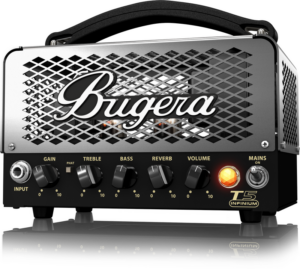
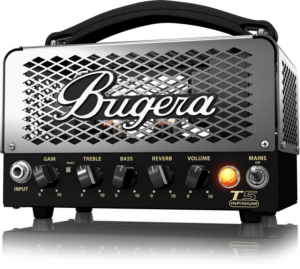
The Bugera T5 Infinium is a budget-friendly lunchbox-style 5-watt amp head. It shares the same genuine tube preamp and power amp design as the bigger Bugera V5 Infinium. And it even comes with power attenuation.
The preamp section features a 12AX7 paired with an EL84 power tube, which works with Bugera's Infinium technology that prolongs the tubes' lifespan.
It comes with essential volume and gain controls, which allows for tones that go from clean to slightly dirty to mid-gain. The EQ knobs have a good taper, which makes it easy to shape the sound. For the price, the Bugera T5 Infinium produces good-sounding tube tones, and you can do so with minimal tweaks.
Allowing the amp to cross over into the mid to high gain range is the "Phat" button. This boosts the signal, behaving like a pseudo 2nd channel with more gain and grit. The resulting tone makes the amp sound more premium than it is - full, gritty, warm, and responsive.
The downside is that it doesn't do modern high gain; for that, you'll have to settle with pedals. Speaking of pedals, the T5 Infinium's simplicity makes it a pedal-friendly amp. Another downside is the noise, which gets more annoying as the tubes age.
If its 5-watt power rating is too loud, you can use its built-in power attenuator to go lower at 1 or even lower at 0.1 watts. It also comes with a headphone out to make it viable for quiet practice.
In keeping with traditional tube amp formats, it comes with built-in reverb. This puts it on the spot as the best clean amp with a reverb of this size.
This is for you if you're looking for an affordable, small tube amp head with vintage-style tones. Its grit and responsiveness make it the best low watt practice amp head on a budget.
Specifications
- Power Rating: 5 Watts (Switchable to 1W, 0.1W)
- Preamp Tube(s): 1 x 12AX7
- Poweramp Tube(s): 1 x EL84
- Controls: Gain, Phat, Treble, Bass, Reverb, Volume
- Input(s): Normal
- Output(s): 4ohm Speaker Out, 1 x 4" Headphones Out
- Weight: 9.04 lbs
- Suitable for: Clean, Blues, Rock, Alternative
| Website | Source | *Rating Value |
| TDPRI | Garruchal | 90/100 |
| The Gear Page | LPVM | 88/100 |
Things to Consider When Buying a Small / Low Watt Tube Amp
If you’re not sure where to start on your hunt for a small tube amp, or you just want to brush up on your background knowledge before putting any money down, check out the sections below.
- Back in the '60s, Tube Amps hovered around 15 watts. The Vox AC15 was used to great success by acts like The Beatles as the loudness was adequate to keep up with the drum kit. But, as their fanbase grew, so did venue sizes and the volume of screaming fans.
PA Systems back then were not as efficient as they are now. Medium size venues have sound systems that could only get loud enough for the vocals. Miking guitar cabs was also out of the question since it would distort the PA system as well. The solution was to double the wattage and double the speakers, coming up with models like the Vox AC30 and from Fender, the Twin Reverb.
As rock music grew in popularity and venues grew, The demand for high-wattage amps like the 100W Marshall Super Lead by guitarists like Pete Townshend came into vogue. Soon, stages became filled with the iconic "wall of amps" which were all actually plugged in and extremely loud!
This is why these days, having a 100W amp is more of a personal luxury than it is a necessity. Even then, these behemoths sound tame and lifeless with volume constrictions. They are also impractical to bring to gigs unless you have a team of roadies to carry their heavy frames.
The days of the guitarist’s set-up including full-stack Marshall amps or giant Fender tube amps are all but gone. Advancements in PA Systems allow even the smallest amps to be miked up and dispersed to venues of any size. Most of the time, you'd want something that can get that satisfying tube tone at more manageable levels or a portable backup to your regular gigging rig. Some tube amps now come with power attenuation and speaker emulated output to tame their volume and make them viable for practice.
- The most important thing to know when looking at small, low wattage tube amps is that a linear increase in wattage doesn’t translate to a comparable increase in volume. In plain speak, a 110-watt tube amp isn’t going to be 10% louder than a 100-watt tube amp.
Small tube amps don't necessarily mean they're quiet. As a general rule, volume doubles for every 1000% increase in wattage. A 100-watt amp (assuming speaker size and construction is similar) will usually be twice as loud as a 10-watt amp at peak volume. Note that because of how valves work, loudness has become a distinguishing factor between Tube Amp vs Solid State. Tube amps are perceived to be louder than solid state amps of the same power rating.
As wattage increases, you get more volume before your amp starts to distort. Likewise, doubling the wattage only increases peak output by around 3db so a 100-watt amp is only 3db louder than a 50-watt.
Low watt tube amps can also be pushed harder, letting the power amps do much of the work for the drive tones. This is desirable in a studio setting where a larger amp might be too loud before the power amps even start to get pushed.
The best tube amps for home use would be an amp with less than 10-watts (depending on how much tube-based distortion you want) and a master volume control. That way you still have some headroom (headroom is the amount of volume you get before your amp starts to distort) but you can still get valve distortion without wall-shaking volume.
- Amps mainly come in two design configurations: combos and heads. Amplifier Heads are essentially just the “guts” of your amp, so they don't make sound on their own. A combo amp includes a speaker in addition to the “guts”.
Amp heads allow you to have a lot of flexibility in your tone. You can use different speakers and cabinets to dramatically alter your tone. The downside is that buying a head and cabinet separately generally costs more than just buying a combo amp.
Combo amps are a more cost-effective but less flexible option. Should you wish to, you can also change the speakers to get a different tone (but you will be stuck with the cabinet, which houses the speaker and electronics).
- Voicing refers to what tone an amp is based on. An “American voicing” almost always means that the amp sounds like a Fender, and a “British voicing” means that the amp is based on a Marshall or Vox. The importance of Tone in Music is undeniable, hence the reason why many guitarists prioritize good tone.
American and British voicings does not refer to geographic location. Rather, it refers to how the amp sounds. "American" amps are known for their smoother tone with a focus on low-mid frequencies. "British" amps are often characterized as having a strong and assertive mid-range. Generally speaking, 6L6 type tubes sound more “American”. The EL34 and the EL84 tubes usually have a British tonality.
- As you change Gain Settings, tube amps behave differently, and this is true in the clean channel as it is in the overdrive or lead channel. If clarity is your priority then you want to have tube amps that sound great with minimal gain. Blues style playing require just a bit of gain to achieve a biting tone. Modern rock and metal often need medium to high, even ultra gain levels, to appease guitarists. There isn't a single small tube amp combo that can do all that, so you'll need to pick one that suits you best. Or better yet, get different amps for the styles that you play.
- As speaker size increases, so too does an amp’s representation of low and low-mid frequencies. Amps with larger speakers sound fuller and warmer, and amps with smaller speakers have a stronger high-mid and high-end representation. Smaller speakers also have a more focused and direct tone.
The most commonly used speaker size is 12”.
When you see the terms like 1x8, 1x12 or 2x12 that tells you how many speakers the amp has and what size they are. For example 1x12 means a single 12" speaker and 2x12 means two 12" speakers.
- Cabinets (where the speaker is located) come in two configurations: closed and open. An open-backed cabinet has a more "airy" tone because the sound disperses in a wider area with a less focused low end. A closed back cabinet sounds more focused with a tighter low-frequency spectrum.
Cabinet construction varies by manufacturer and model. And discussing all the differences will take a lot of time. Generally speaking, size, material density, and speaker positioning affect the tone in more subtle ways than the distinction between open and closed-back cabinets.
Tube Amp Overview
Wattage and Volume
Combo Amps vs. Amp Heads
Voicing
Gain Settings
Speaker Size (1x8, 1x12)
Open vs. Closed Back Cabinets
Best Low Watt Tube Amp Selection Methodology
The first edition was published in December 2017, and the current edition was published on Feb 29, 2024.
First, we looked at small tube amps, 15 Watts RMS and under, that are top-rated and popular, including combo amps and amp heads, but limited to those that can be readily bought from major US-based retailers.
For this edition, we short-listed 54 tube amps and gathered over 17,100 relevant reviews, ratings, and forum discussions about them. All these data were fed into the Gearank Algorithm to produce our rating scores out of 100, which we then used to filter out the highest rated of each amp type - combo and head. For more information about our methods, see How Gearank Works.
About the Author and Contributors
Here are the key people and sources involved in this guide's production - click on linked names for information about their music industry backgrounds.
Lead Author & Researcher
Alexander Briones
I have been writing about and researching music gear for many years, all while serving as a music director at my local church. I engage in guitar playing and singer-songwriter stints, in addition to mentoring young musicians and teaching guitar and bass.
My main electric guitar include a 2016 Gibson Les Paul Tribute Goldtop and a 1983 Fender Strat JV (57ri). My favorite gigging amp is the Fender Princeton tube amp, so it only follows that I go for Fender when it comes to small wattage tube amps. I especially love the tone and feel of the Fender Blues Junior and Champ.
Contributors
Jerome Arcon: Research.
Raphael Pulgar: Orange Dark Terror review and photograph.
Jason Horton: Editing and illustrating.
Media
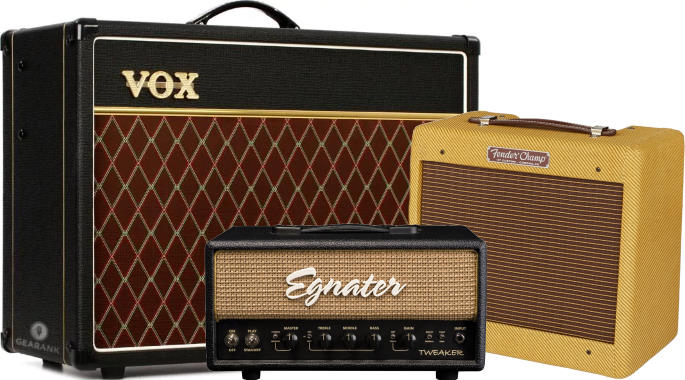
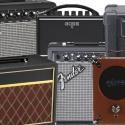
Main/Top Image: Compiled using photographs of the Vox AC15C1, Egnater Tweaker and Fender '57 Custom Champ.
The videos have been embedded in accordance with YouTube's Terms of Service.
The individual product images were sourced from websites, promotional materials or supporting documentation provided by their respective manufacturers, with the exception of the Orange Dark Terror rear panel which was photographed by Raphael Pulgar.
Publication of our August 2022 Edition resulted in the following amps coming off the recommended list above:
The following amps came off the recommended list above when we published our February 2022 Edition:
Publication of our July 2021 Edition resulted in the following amp coming off the recommended list above: Fender Super-Champ X2 HD.
Should add the Marshal DSL1 1 watt amp. Such a great sounding little amp when run through a 1×12 cabinet. You can even play with a band if you’re not intending on playing metal etc and the drummer isn’t going too nuts. Built in reverb and two channels.
They are nice little amps indeed, although they only have 1 channel.
In fact the combo version with reverb is currently the Highest Rated Guitar Combo Tube Amp between $300 and $500.
The head version missed out on being recommended in this guide, but it’s still worth considering if you want that Marshall sound – see our analysis of it here.
Princeton Reverb should be on this list.
We did consider both the ’65 and ’68 Fender Princeton Reverbs, and though there are a lot of guitarists that like them, they didn’t have high enough ratings for us to recommend them in this guide.
You can see our Fender Princeton Reverb ratings here.
You should have reviewed The Paul Reed Smith – Mark Tremonti MT15 Tube Amp Head
Thank you very much for your advice Anthony.
As it happens, we did analyze that amp but forgot to push the rating info out to the Music Gear Database, so it looked like we might have missed it.
When we published this category’s July 2019 update, the PRS Mark Tremonti Signature MT 15 had a Gearank rating of 89 based on 70+ ratings and reviews, which was below the cutoff for inclusion in the Best Low Watt Tube Amp Heads section above.
Thanks to your prompting, I’ve published the ratings for the 3 amps on our short-list that we initially forgot to make public: