
Disclosure
We recommend all products independently of 3rd parties including advertisers. We earn advertising fees from:
• • • • •

• • • • •
Amazon
As an Amazon Associate we earn from qualifying purchases.
• • • • •
Patch Cables & Pedal Couplers are little unsung heroues that connect your guitar pedals together, and we don’t give them much thought until they’re not doing their job properly.
Here we feature the best patch cables, the tried and tested market favorites, gathered through intense research and rated by our very own Gearank Algorithm.
Signal loss, interference and stubborn inflexibility are just some of the problems you are bound to encounter when using lower quality cables and couplers.
So to make the most out of your expensive collection of pedals, you want to connect them together with high quality and reliable patch guitar cables.
Good thing we took all the guess-work out of selecting links worthy of completing your signal chain.
List of The Best Patch Cables for Guitar Pedals
| Gearank* | SRC* | Check Price | ||||||
|---|---|---|---|---|---|---|---|---|
| Guitar Patch Cables | ||||||||
 | Ernie Ball Flat Ribbon | 98 | 1450+ | |||||
 | EBS PG-10 Flat Patch Cable | 98 | 850+ | |||||
| Guitar Pedal Coupler Connectors - Straight | ||||||||
 | OTraki Pedal Coupler Straight | 90 | 475+ | |||||
| Guitar Pedal Coupler Connectors - Offset | ||||||||
 | OTraki 0021 - 4 Pack | 92 | 550+ | |||||
| DIY Solderless Patch Cable Kits | ||||||||
 | Evidence Audio SIS/Monorail | 93 | 350+ | |||||
Author & Contributors
Alden Acosta
I'm a drummer and former lead guitarist of the band Callalily, a platinum selling multi-awarded band from the Philippines. I also studied music for 6 years majoring in percussion and jazz studies with a minor in classical piano.
The Best Guitar Patch Cables
Ernie Ball Flat Ribbon Patch Cable
Cons
- 3 inches is not long enough for complex setups
Pros
- Solidly built - premium feel and detailing
- Low profile plugs and short, flat cable works with well with most simple pedal configurations and saves space
- Relatively transparent sounding and noise-free operation
These feel great in the hands. They have a good weight to them - not heavy but substantial enough to exude reassuring quality, premium-feeling patch cables indeed.
The flexibility is quite alright for a set of flat guitar patch cables. They are not the softest feeling wires I've tried but since these are fresh from the mail I expect these to soften up after some use.
Also, being 3 inch cables, they'll most probably be relegated to simple right to left setups that aren't too reliant on extreme flexibility.

This certainly is a fine piece of guitar cable.
Being flat cables, they quite prefer being flexed up and down than side to side. Twisting okay too but not as natural feeling as your regular rounded cables so this will definitely work better with some layouts over others.
Based on my experience with patch cables, no one type is best for all layouts but flat cables are a space-saving good bet for many of your typical configurations.
The cable texture reminds me somewhat of a stick of gum. The slightly textured matte white has a tinge of cream - I feel like due to the color, these could get dirty quite quickly and easily.
I'm very pleased with these short, little flat ribbon patch cables. Approximately 3 inches might be enough for most simple setups, but if you're serious about building complex boards I suggest buying an assortment of lengths, optimally of different colors to signify the lengths at a glance.
These Ernie Ball 3" Flat Ribbon Patch Cables don't take up a lot of space, sound transparent enough, and feel robust and high quality.
These are ideal guitar effect pedal cables for minimalists and for those who are running out of pedalboard real estate.
Specifications
- Plug: Low-Profile Right Angle
- Conductor: 99.95% OFC (Oxygen Free Copper)
- Cover: PVC Jacket
- Shield: Dual Shielding
- Length: 3"
- Variants: 3", 6", 12", 24"
| Website | Source | *Rating Value |
| Gearank | Alden Acosta | 96/100 |
EBS PG-10 Premium Gold Flat Patch Cable
Cons
- Nothing serious
Pros
- Extremely compact, space-saving profile - can get pedals very close to each other
- Flat cable design easy to work with, cuts down setup time and cable checking/maintenance
The PG-10 Premium Gold is a highly rated patch cable from EBS Sweden.
The name itself is an easy giveaway of its main feature, which is the use of premium 24-karat gold plating on the contact housing and 1/4" plugs. Both add to its overall look and performance (the gold helps prevent corrosion - it does not improve your signal).
More importantly, even with its gold plated contacts, this patch cable retains a very reasonable price tag. The EBS PG-10 also comes with a flat profile cable and flat right angle plugs, which makes this patch cable easier to position, and if implemented properly, saves you a lot of precious pedalboard space.
I appreciate is the EBS PG-10's compact profile which is a dream to setup, almost giving me space for 2 extra pedals on my board. The flat cable design is very easy to work with, cutting down pedal substitution time and cable checking/maintenance by a considerable margin.
It also works with a lot of asymmetrical layouts that might be harder to wire with regular round cables due to the flat cable's unique flex characteristics.
If you need some flat patch cables and having 24 Karat gold-plated connectors is something that excites you, I recommend the highly rated EBS PG-10's.
Specifications
- Plug: Flat Right Angle 24-Karat Gold Plated Plugs
- Conductor: 20 x 0.12 mm copper conductor
- Cover: PVC
- Shield: Double Copper Shielding
- Length: 3.9"
- Variant: 18, 28 and 58 cm
| Website | Source | *Rating Value |
| YouTube | thejay | 92/100 |
| The Gear Page | CJReaper | 96/100 |
Guitar Pedal Coupler Connectors - Straight
Pedal couplers are simply two plugs connected back to back, removing the need for any cabling. They are ideal for linking pedals together that have identical input/outport jack placements to each other.
OTraki Pedal Coupler Straight
Cons
- Only works with pedals that have their input and output jacks aligned perfectly with each other in height and position
Pros
- Sturdy and solid build quality
- Holds pedals in position when connected
- A great value for money set
The OTraki Pedal Coupler features two gold-plated 1/4" copper plugs, each one facing opposite sides for cable-less side-by-side positioning of pedals.
The use of gold tip contacts is a feature that you won't normally find in affordable couplers and patch cables.
This ups the value of this 6-pack bundle, which should be more than enough for most small to medium sized pedalboard setups. These work great if your pedalboard configuration will allow it.
I would describe the feel of these couplers as sturdy and solid and they have the added bonus of holding your pedals in position when connected. Value for money is another thing the OTraki Straight Couplers have going for them.
Like other straight couplers, they only work with pedals that have their input and output jacks aligned exactly with each other in height and position. Not properly aligning the pedals can damage the output/input jacks.
This style connector is a bit controversial amongst guitar players due to there being no points of flexibility designed into it. That makes sense to me but I haven't encountered any major issues yet, I suggest taking extra care when positioning your pedals.
If you feel like the couplers are applying force to your jacks, make sure that your pedals are not moving up and down which can be the case if you are using hoop and loop fasteners to attach them to your pedal board. Also make sure that your pedals are perfectly leveled to each other.
If you're looking for an affordable set of straight couplers to try out this unique aesthetic, then try these highly recommended OTraki Pedal Couplers.
Specifications
- Pack: 6
- Plug: Straight Coupler
- Conductor: Copper wire with Gold Plated Contact Points
- Length: Not Specified
Guitar Pedal Coupler Connectors - Offset
Offset couplers are ideal for those with pedals from different makers, or those who own pedals that are not directly aligned.
OTraki 0021 - 4 Pack Pedal Coupler 1/4 inch Z Type
Cons
- Never going to be as versatile as patch cables - limited jack placement variations it can accommodate
Pros
- Z-profile design, allows for more flexibility to connect different pedal types
- Good build quality
- Reduces overall cable length of your setup thereby improving signal quality
- The pack of 4 is great value
The OTraki 0021 is a Z type pedal coupler that features gold-plated copper connectors. It has a round middle section where the two plugs join for easier handling.
Being a Z-type coupler means that there's a bit more leeway in positioning compared to straight couplers, but do note it's still quite limited compared to regular patch cables.
This is great for neat-freaks and giant 10+ pedal boards. It's a novel way to reduce the length of wire used in your signal chain thereby improving your signal quality.
And in contrast to straight couplers, these won't work well if all your pedals have the same jack input and output placement - lest you make your pedalboard resemble a flight of stairs. Maybe have both types on hand for more options.
I appreciate the OTraki 0021's offset design, which allows for a bit more flexibility to connect different pedal types. Also, I'm satisfied with how solid the plugs are, and with a bit of smart placement, I'm able to shorten the runway on my pedalboard with this coupler.
These work especially great for mini pedals.
Even with its Z-profile, this coupler is never going to be as versatile as patch cables. There's definitely a limit to the jack placement variations this can accommodate. It still won't solve your problems if the position and height of the 2 pedals is extremely pronounced.
With its combination of great value and solid build, the OTraki 0021 is the z-type coupler you should go for.
Specifications
- Plug: Z-type Coupler
- Conductor: Gold-Plated Copper
- Length: 2.9"
The Highest Rated DIY Solderless Patch Cable Kits
Evidence Audio SIS/Monorail Solderless Patch Cable Kit
Cons
- A bit expensive compared to other solutions
- No warranty due to DIY assembly
Pros
- Reliable noiseless operation
- Easy to use and assemble
This SIS/Monorail Solderless Patch Cable kit from Evidence Audio features a small diameter cable of only 0.155 inches to help save space on your pedalboard.
The plugs can be unscrewed and re-used on new cables when re-organizing your pedal layout.
While this Evidence Audio kit might seem a bit on the pricey side, their cables are used by notable musicians such as David Gilmour, Ed O’Brien, Noel Gallagher, Guthrie Govan and Andy Timmons - this demonstrates that Evidence Audio really know what they're doing when it comes to cabling.
Add to that they are a respected OEM wiring provider for some famous and boutique brands such as Fender custom shop, OktavaMod and Black Lion Audio.
Although not a fault of evidence audio but something to consider is that these kits don’t come with a warranty due their do-it-yourself nature.
There are just too many factors when built by the end consumer that could go wrong. But if it's good enough for the likes of David Gilmour, Noel Gallagher and Guthrie Govan, they should be reliable enough for mere mortals like us.
I consider this as the best patch cable kit for its quality, both in terms of build and noiseless operation. Also, being solderless this kit is easy to use and assemble even for someone that's not especially handy like me.
I'd recommend this kit to guitarists who want to go the DIY, custom route without sacrificing build quality.
You invest a lot in your pedals and the rest of your rig, so if you want to find out why so many top guitarists use Evidence Audio then consider buying this top-of-the-line patch cable kit.
Specifications
- Pack: 10" Cable, 10 Solderless Plugs
- Plugs: Right Angle Solderless
- Conductor: 20 awg IGL
- Length: 10'
| Website | Source | *Rating Value |
| DelayDude | Editor | 98/100 |
Things to Consider when Buying Patch Cables
- Patch cables come in different lengths, usually 3" to 18" long. Since they are pre-cut to specific lengths, it is best to plan and measure the position of your pedals prior to selecting the right sizes.
Patch cable kits like the ones we recommend above are ideal if you want to have detailed control over how long each patch cable should be on your board. We've also included pedal couplers in this guide in case you're connecting pedals of the same profile and maker to save even more space.
Note that while patch cables are short, they can add up significantly if you have a lot of pedals, and this may cause some frequency response loss.
- Much like regular instrument cables, many patch cables are available in bundles, and most of the time they are cheaper to buy compared to when buying them one by one.
We also recommend keeping a few spare patch cables, for quick swapping out of those that have gone bad.
- Many patch cables come with right angle TS Connector Plugs because they conveniently connect to the side and save space. There are also low-profile (sometimes called thin, flat or pancake jacks) right angle plugs that allow you to position effects pedals closer to each other.
Note that right angle plugs can block ports that are positioned close to each other, so do look out for those when planning your pedalboard layout.
You'll notice that some audio cables have gold-plated tips, which has become industry standard, this is because of gold's inherent corrosion resistance. Nickel or chrome plugs corrode faster when exposed to humidity, and is often the reason you hear crackling / handling noise on plugs with older tips.
- The cable jacket serves as the cable's outer protection and is usually made of sturdy yet flexible PVC. On the inside of the jacket, the copper conductor is wrapped in a special "shield" that blocks interference.
Foil shielding is the most affordable, but it offers the least protection. A reliable good quality cable usually comes with Braid shielding. It is inherently flexible and sturdy, and can block more EM (Electro Magnetic) and RF (Radio Frequency) interference.
Patch cables in particular should be more resilient to interference since they are meant to sit in between multiple electronic devices.
- Since patch cables don't move around much, they don't need strain relief as much. And they don't get as beat up as the cables that you plug to your guitar.
Still, it pays to get ones that are durable in case you misstep on them, or when pedals become loose during transport or while performing. Patch cables are usually expected to be discrete looking because pedals are the stars on pedalboards, but there are a few who want their patch cables looking a certain way.
And if you think aesthetic qualities inspire you to play better, then invest in good looking yet quality patch cables.
- Since pedal couplers literally don't have cables, you have to carefully align the input and output jacks of your pedals. Even a slight misalignment during transport can either bend the coupler, or damage the ports of your pedals. You have to consider this when setting up your Guitar Pedal Signal Chain.
After setting up, it is also possible for the pedals to be misaligned by those who forcefully step on their pedals during performances. This can be remedied by properly securing your pedals on your board, and common sense stepping pressure, but generally speaking, those who tend to step hard on their pedals may want to stick to patch cables.
Cable Length
Bundles
Plug Type
Jacket and Shield
Reliability and Aesthetics
Pedal Coupler Alignment
Best Patch Cables Selection Methodology
The first edition was published in 2017.
We first looked at the top options available in the USA and short-listed 33 patch cables, kits and couplers to publish ratings for - you can view the entire list in the Music Gear Database. Then we collected relevant reviews, ratings and forum comments about each one. For this edition, we ended up with over 21,400 sources (10.3% more than the previous edition) and processed them with the Gearank Algorithm to produce rating scores out of 100 for each item. The resulting Gearank Ratings were then used to narrow down the list to just the cream of the crop in each category. For more information about our methods, see How Gearank Works.
About the Author and Contributors
Here are the key people and sources involved in this guide's production - click on linked names for information about their music industry backgrounds.
Lead Author & Researcher
Alden Acosta
I'm a drummer and former lead guitarist of the band Callalily, a platinum selling multi-awarded band from the Philippines. I also studied music for 6 years majoring in percussion and jazz studies with a minor in classical piano.
I've had over 17 years of electric guitar playing experience. My setup is ever-changing and evolving in search for the perfect balance between convenience, fun, reliability and sound quality. Currently, I use custom-made patch cables along with Ernie Ball Flat Ribbons.
Contributors
Alexander Briones: Supplemental writing.
Jason Horton: Editing and Illustrating.
Media: Image Credit
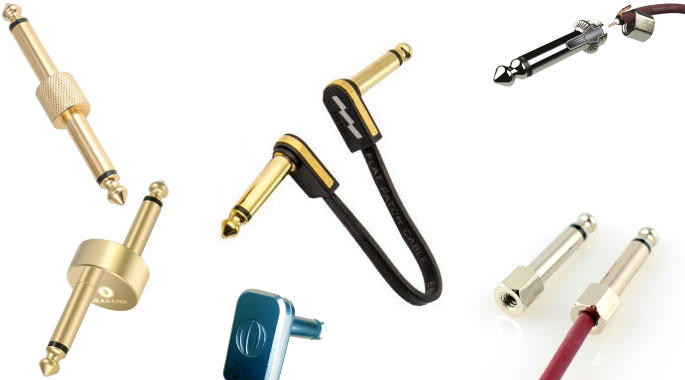
Main/Top Image: Compiled using photographs of the OTraki Pedal Coupler Straight, OTraki 0021, EBS PG-10, Ernie Ball Flat Ribbon and Evidence Audio SIS/Monorail.
The individual product images were sourced from websites, promotional materials or supporting documentation provided by the respective cable manufacturers except for the Ernie Ball 3" Flat Ribbon Patch Cable in hand photo which was taken by the author.


Great job on the article buddy!
I have been using EBS PG-10 for quite some time now.
Quick question, how well does the Evidence Audio SIS/Monorail hold up?
Thanks for the compliment!
We haven’t done a long duration test on the Evidence Audio SIS/Monorail yet, but I also haven’t seen reports of anything going wrong with the connection to the plugs from others either, and I’ve looked at quite a few hands on reviews by others.
The following items came off the recommended list when we published our September 2022 Edition:
Publication of our October 2021 Edition resulted in the following items coming off the recommended list above:
Our November 2020 update resulted in the following coming off our recommended list above, but you can still read our analysis of them:
As a result of the November 2019 update the following items came off our recommended list above but you can still see our analysis of them:
Why did Lava come off recommended list?
Because there were higher rated options for us to recommend when we published the new edition.
As a result of the July 2018 update of this guide the following items were removed from our recommended list above:
Should really add a disclaimer about the couplers. Those are terrible for pedals, even of the same brand. Avoid using them at all costs